
Trailer kit
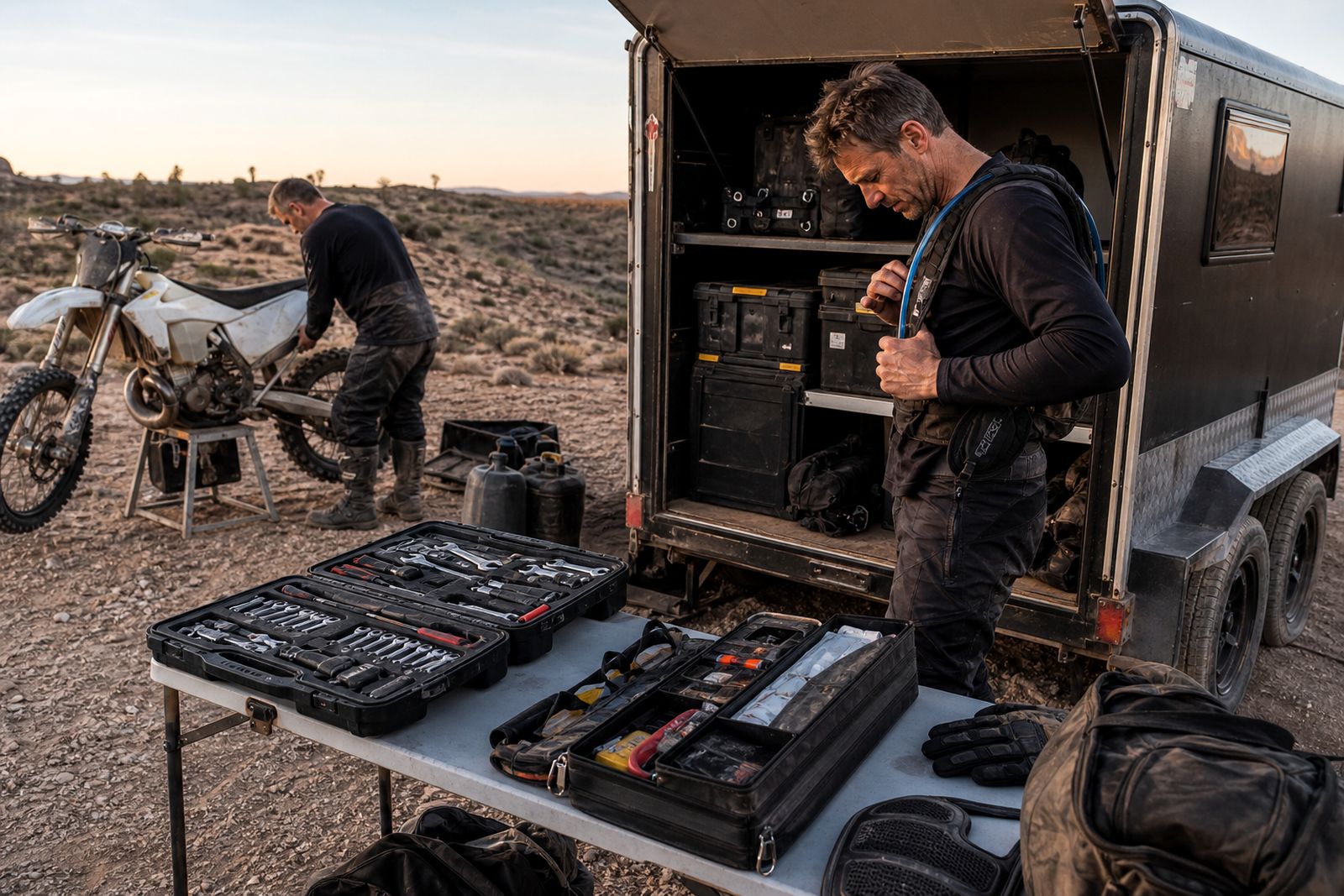
Unloading, sorting and repacking gear around the trailer at a meeting.
Unloading zone beside the trailer
Turning the space around the trailer into an organised base prevents a pile-up of tools, tyres and spares. Gear gets unloaded, sorted and packed again in that zone, giving club teams a practical area to work from.
Morning wind at Killarney scatters packaging and strips labels from tubs, sending loose items across the ground. Gauteng circuits bring bright sun and quick session changes, so it makes sense to split out hot-work tools, tyre gear and refuelling items from the first unload. Where paddock space is limited, the note helps map out where awnings, tow vehicles and neighbouring teams fit in.
Jot down unloading details as soon as gear comes out of the trailer. This habit helps with returning wheel guns, stands, fuel jugs and spare wheels to their original spots at the end of the day. A laminated card on the inside door proves handy when gloves are dirty and everything is moving fast.
Unloading zone essentials
The pack sets out where consumables, electrical items, wet-weather gear and used parts stay during the day, and maps the layout and unload steps ahead of session start. Avoiding a blocked trailer entrance by tyres and opened boxes keeps the day running smoothly.
Once your parking routine is set, write it down so the whole crew follows it. Before a Durban load leaves, check tie-downs, wheel chocks, fuel mats and extension leads against the list. Include car class, circuits and trailer space in paddock kit orders.
Three basics help every unloading zone run smoothly:
- Unload order for tools, tyres and fuel
- First layout details recorded when the door opens
- Packing checks for the trip home
Layout changes for different paddocks
Long walks from parking to pit lane at some venues change how often trolley items are moved. Sudden cold and wet spells at certain meetings highlight the need for dry storage for gloves, paperwork and radios. Zwartkops days usually reward a quick reset area near the trailer door for tyres, tools and drink crates between sessions.
Extension plugs, battery terminals and steel hardware left out overnight need to be protected from rain. Where there is a long walk between the trailer and pit lane, plan how trolley loads will be moved. Extra dry storage for gloves, paperwork and radios keeps gear ready for each session.
Outline how the trailer is parked, where the awning is positioned, and how gear is arranged for the day. Indicate any problem areas, mention if fuel is managed on a specific side, and list items that often go missing after sessions.
Recording the unloading note while loading the trailer keeps details fresh. Adding it to the spares record and meeting summary ensures the next outing starts with the same wheel count, cable set and container labels.
Related pages
Trailer kit specs
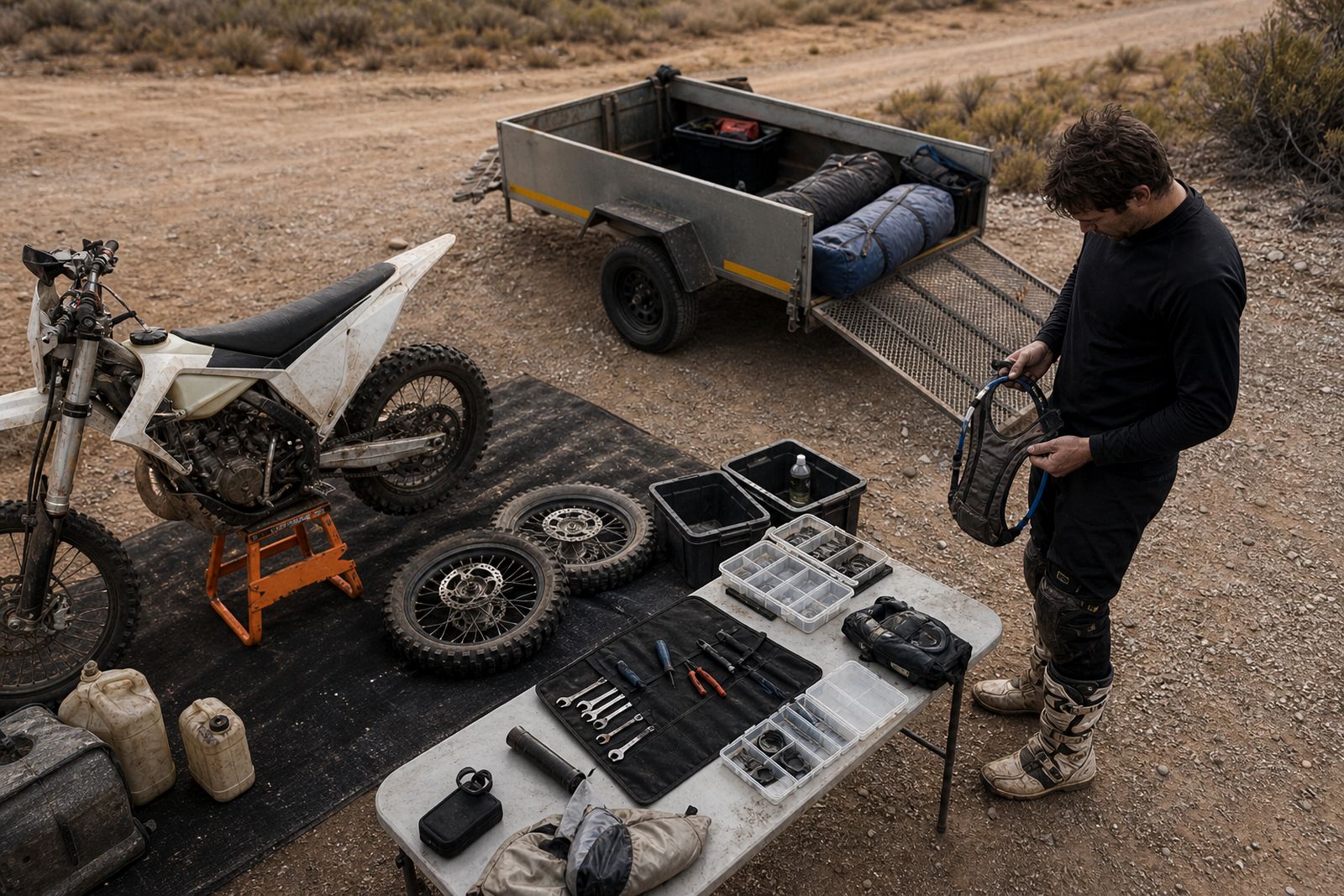
Specification sheet for the trailer kit.
Read more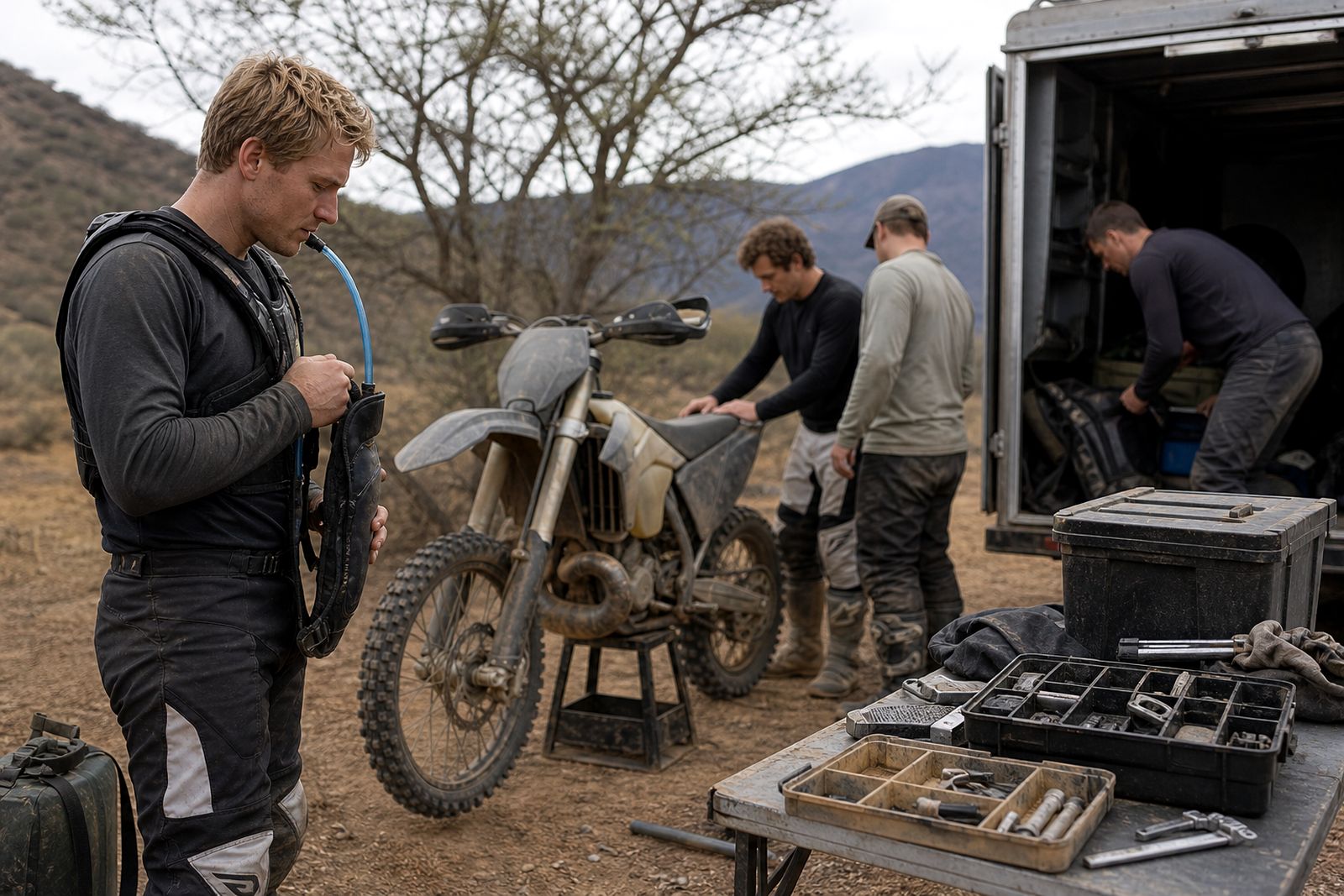
Training day
Crews find briefing gaps and pit-lane routine problems once they start working together.
Read more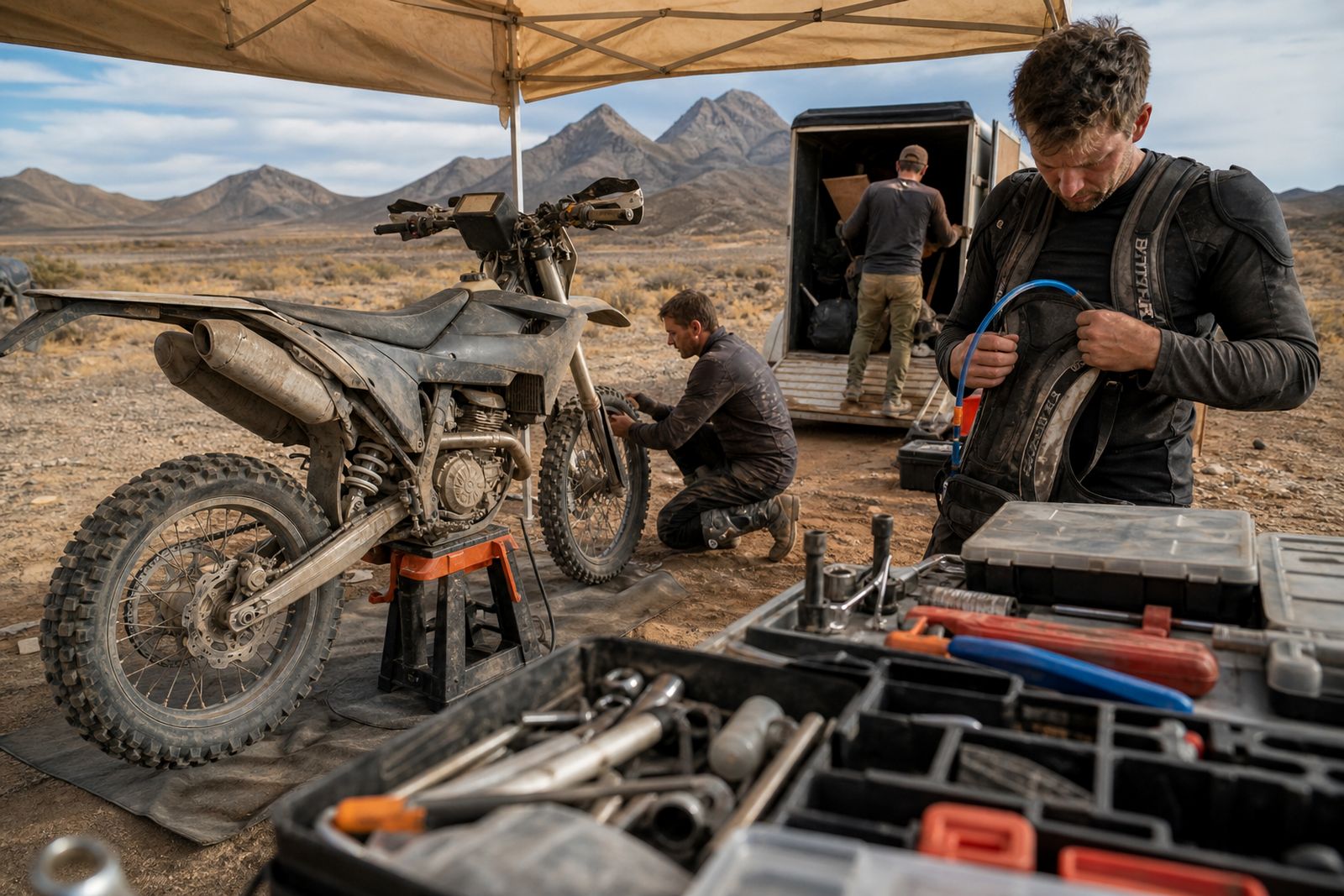
Training pit
Crew movement, tool placement, wheel-change rhythm and repeatable checks all receive attention in this kit, with routines shaped for South African.
Read moreWhat our Race Prep customers say
Verified Google reviews
Plan your next race weekend
Send a note through our contact form with the event, the bike or vehicle, your class and what still needs sorting, and we will come back with practical kit and prep options and a quote.
Open the contact form