Trailer kit specs
Specification sheet for the trailer kit.
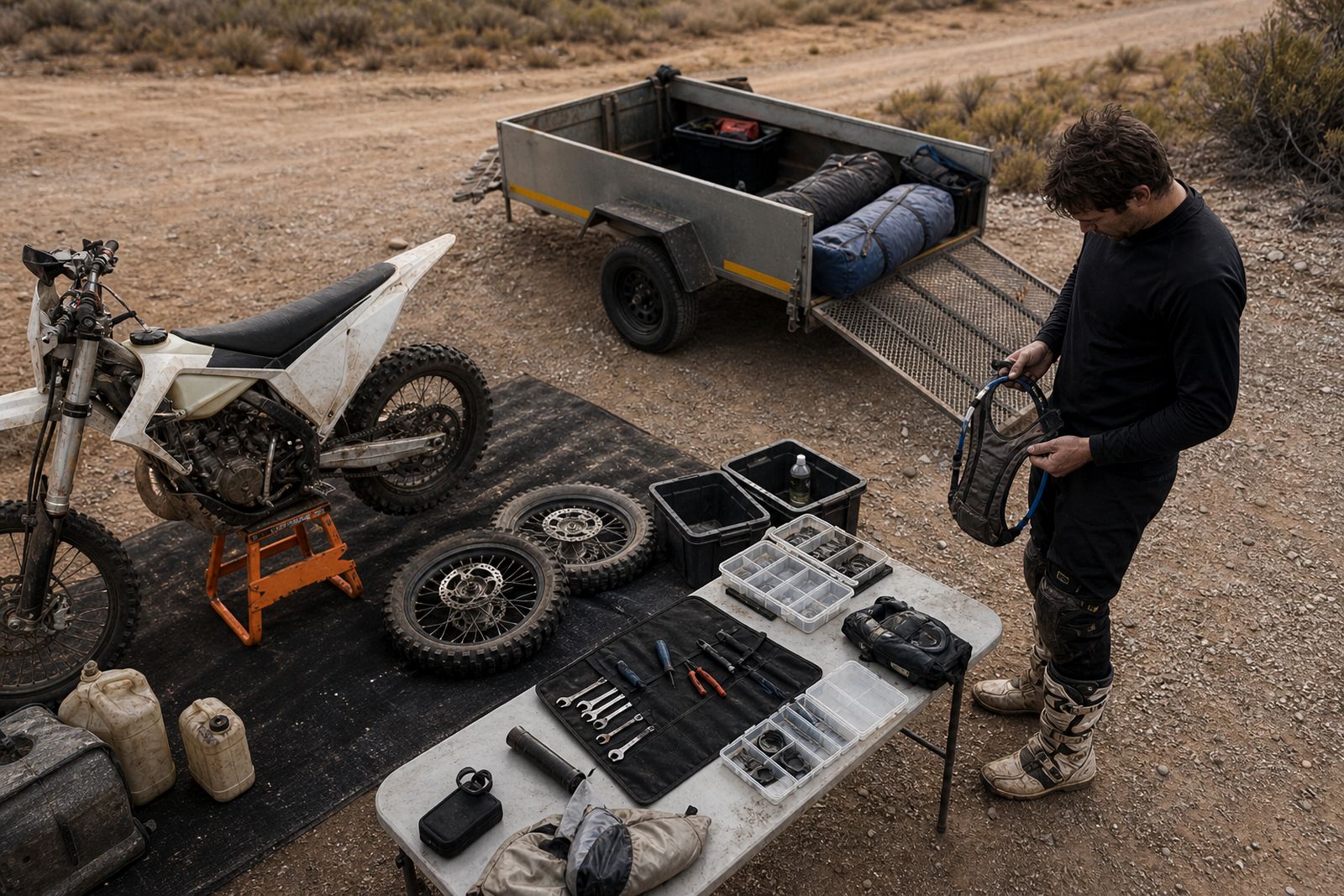
Trailer dimensions and door swing
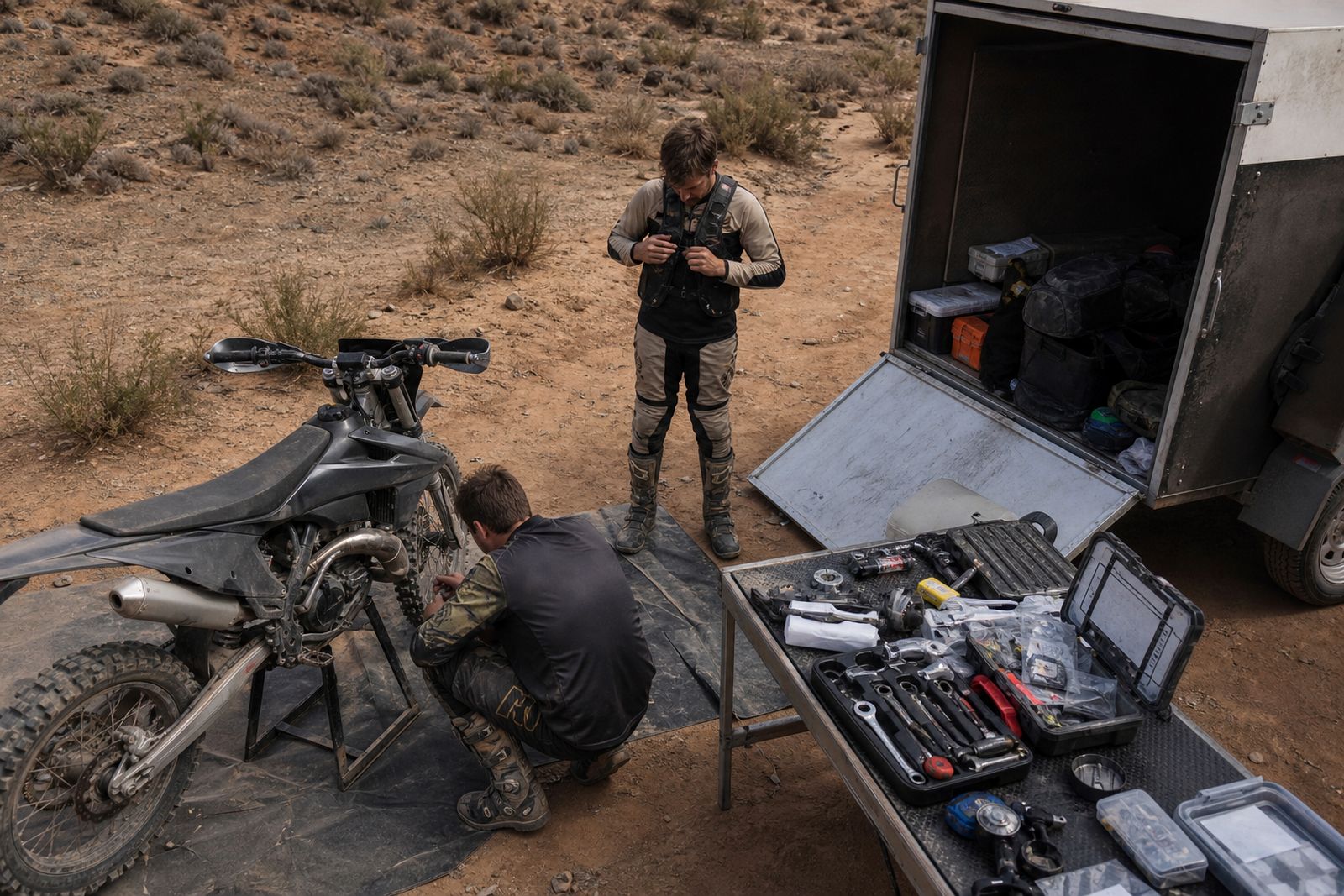
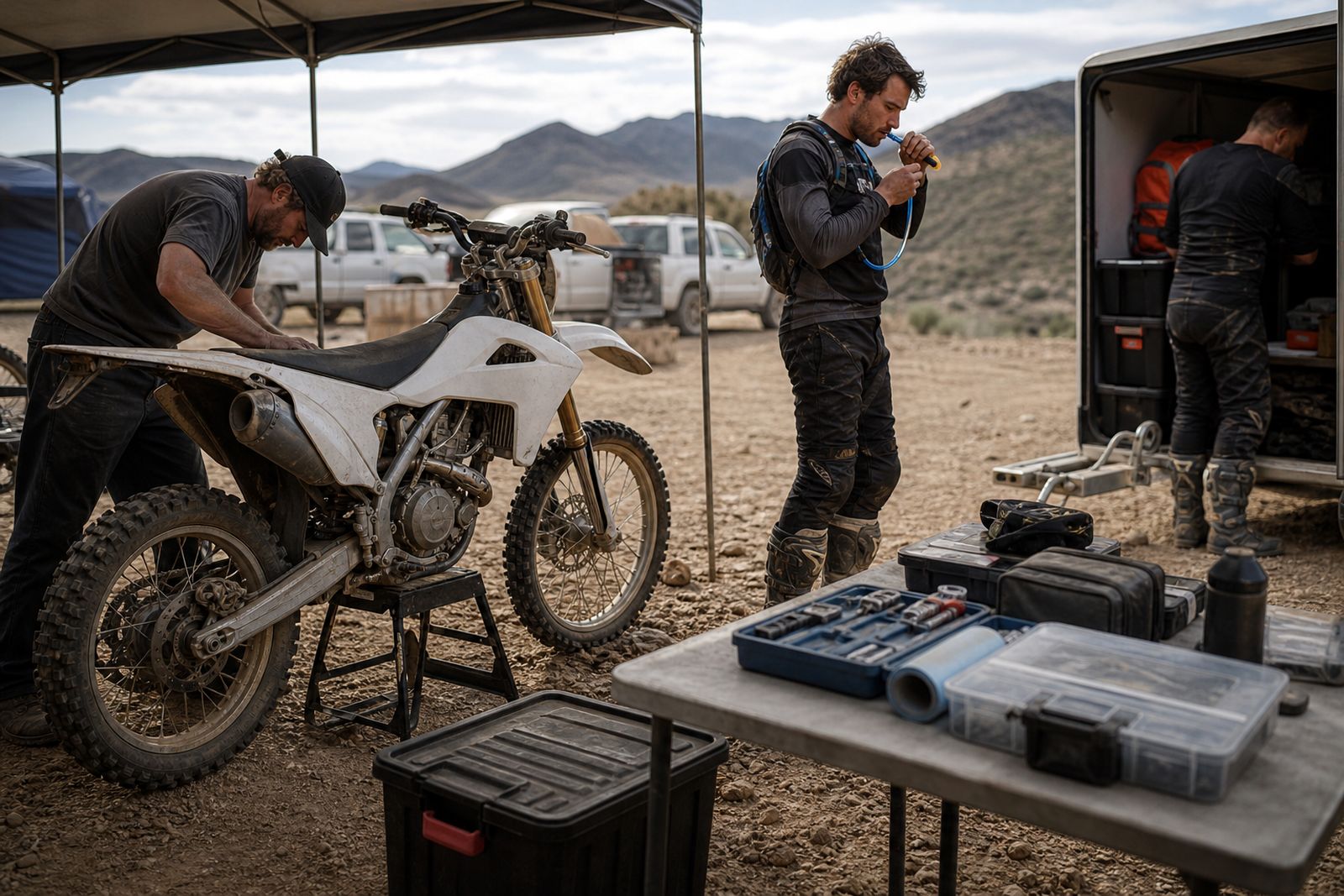
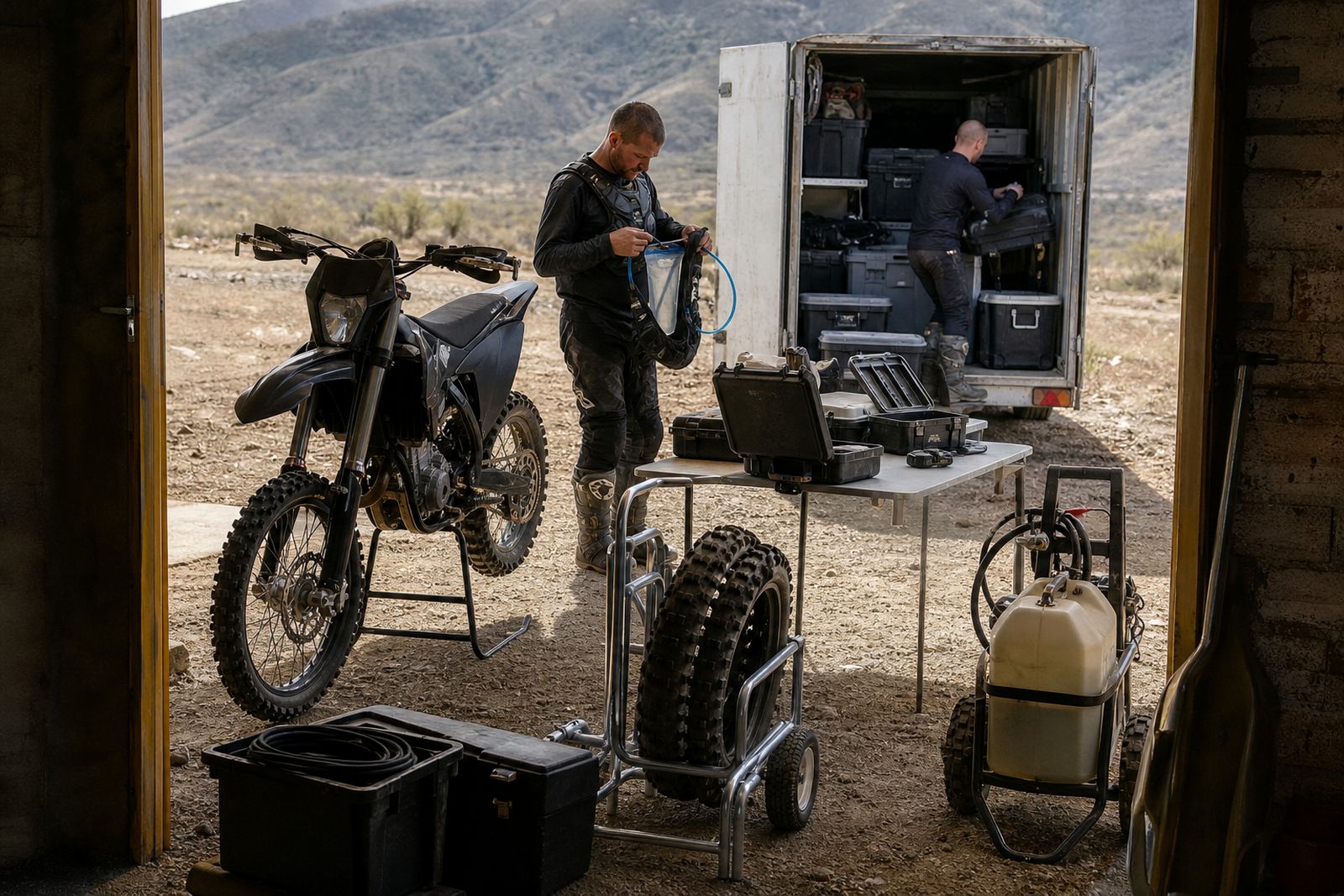
Practical details for loading, storage, and access in the paddock appear in the trailer kit. Compare these notes with how your trailer is used on race weekends.
Dimensions matter most where the car will travel, so measure internal length, usable width between tie-down points, and roof height at that spot. Nose-cone clearance, ramp angle, and side-door opening space become critical at Killarney and Kyalami, where paddock areas can be tighter than expected. Wheel chock placement, jack, fuel jug locations, and spare wheel storage during transport all influence how smoothly loading and unloading go.
Recording how the trailer interior is arranged helps spot packing mistakes before departure. Note strap positions, the cabinet used for fluids, and the tyre rack’s reach into the walkway for easier repacking after a late finish at Zwartkops or Aldo Scribante.
Gear placement inside the trailer
Position each piece of gear according to where it actually sits, instead of just naming items. Show which shelf holds brake cleaner, where awning legs tuck away, and whether the starter battery remains on charge during transit.
Arrange the interior based on the loading order for the next club round. Compare Durban freight with the interior layout before sending by courier, especially if wheels, drums, or body panels travel separately.
Conditions that affect trailer setup
Awning, rear door, and side access may need adjusting when wind increases at Killarney. Decide which equipment stays inside until the car is unloaded and which should be easy to reach once the trailer is parked.
Pay attention to hinges, couplers, and exposed fasteners when planning race kit for Gqeberha and Cape Town. The layout should show where extension leads and backup gear are packed for trackside use. Fuel containers need a stable position away from food boxes, driver kit, and loose electrical gear.
Final checks before departure
Confirm tyre pressures on the trailer, wheel bearing condition, breakaway cable routing, and the latch position on every external hatch. Add actual tow-ball height and number plate visibility if the trailer sits nose-up when loaded.
Pair the setup note with the spares list for each event. Update measurements if the toolbox, compressor, or wheel rack position changes inside the trailer.
What our Race Prep customers say
Verified Google reviews
Also worth a look
Plan your next race weekend
Send a note through our contact form with the event, the bike or vehicle, your class and what still needs sorting, and we will come back with practical kit and prep options and a quote.
Open the contact form