

Spares case
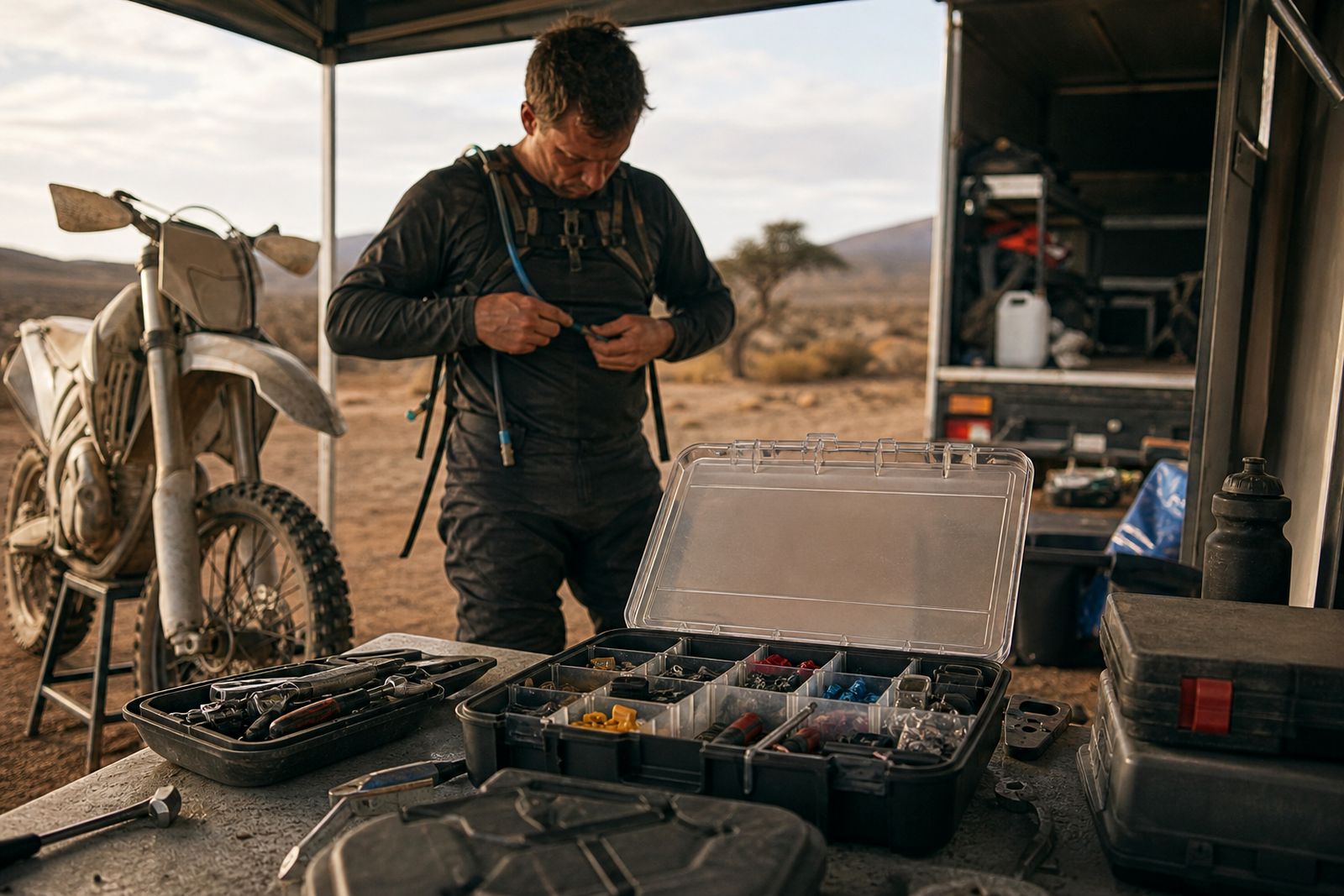
A hard case for fuses, clips, fasteners and small electrical parts.
Paddock failures the case covers
Storing small parts in a single case gives every crew member a clear spot to find what disappears when everyone is under pressure. Acting as a focused race-prep kit, it keeps each item sorted and ready to grab during last-minute repairs.
Cable ties, assorted bolts, hose clamps and spare relays can run out in a single race day. Open trays often scatter in wind and sand at Killarney, while garage changes under pressure at Kyalami and Zwartkops send washers and clips onto the concrete. Each small part sits in a fixed pocket, so the crew can check supplies before loading.
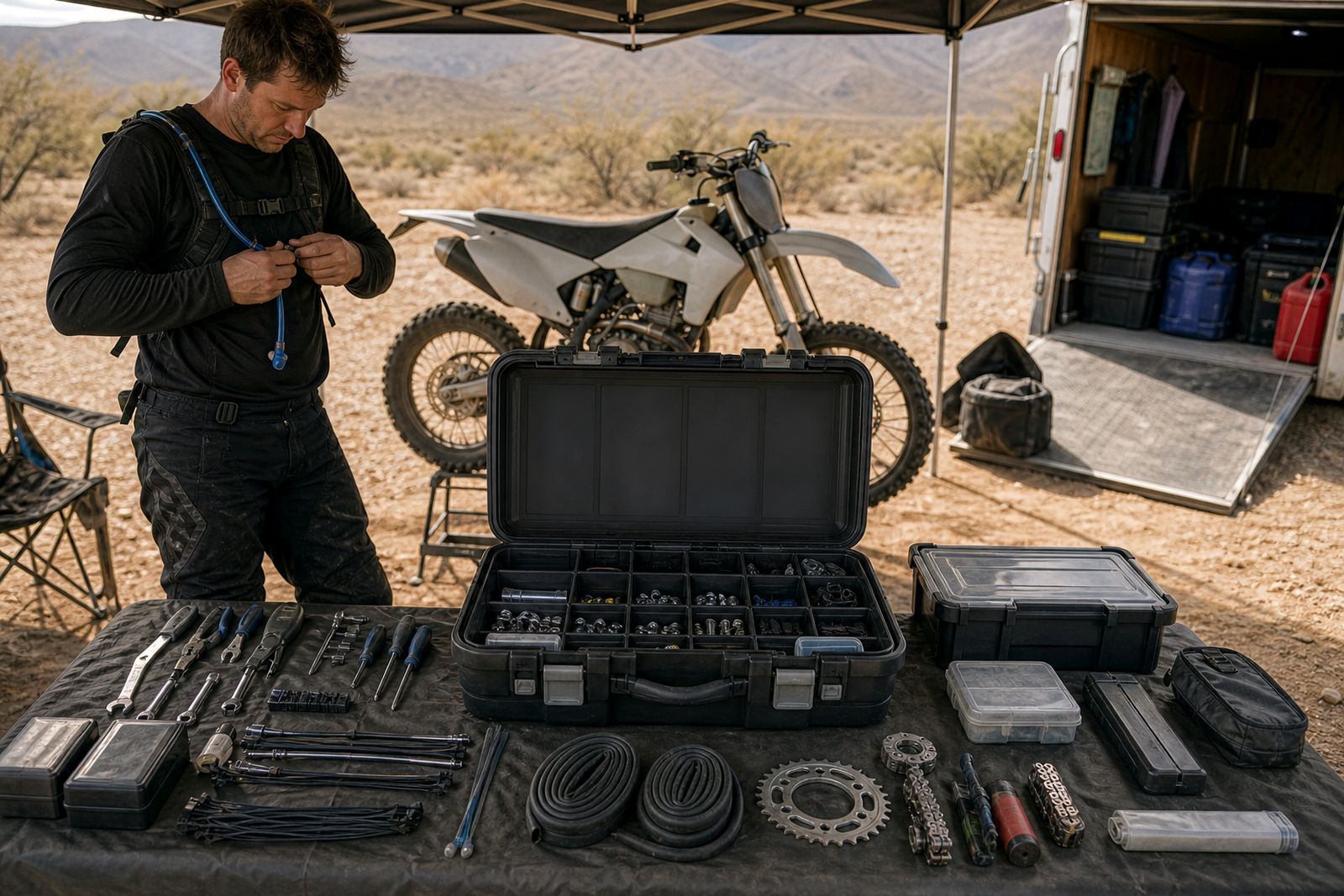
Lid pockets, divided bins and a simple contents card make the case practical when gloves are on and time is short. Mark each compartment with the thread size, fuse rating or connector type actually used on the car, rather than generic labels that are easy to mix up under pressure.
Inside a race-ready case
Nyloc nuts, split pins, valve caps, electrical terminals, bleed nipples, R-clips and sensor adaptors tend to disappear first. Group supplies in the case by job, such as brakes, bodywork, wiring and fluids, so a crew member can grab what is needed without emptying half the box.
Set the case up alongside your main inventory, then cross-check it against what the car actually uses before the trailer leaves Durban, Bellville or Midrand.
Contents found in a race-ready case include:
- Threaded fasteners sorted by size
- Fuse ratings separated from relay supplies
- Space for labels and supply count
Checks for SA race weekends
Secure the case before loading, and wipe it out after each meeting to keep small parts clean and ready for the next event. Closing the case properly and checking each compartment reduces the risk of losing essential items between sessions.
When workshop time is limited, group battery lugs, inline fuses, crimp terminals and spare switch gear together. This makes electrical checks faster and helps the team get through prep tasks on a tight schedule.
Labelling before transport
Mark the owner, class, and car number on the outside, then list the critical consumables under the lid. Include counts for wheel nuts, brake hardware, spare sensors and common connectors so anyone in the paddock can see what was packed without unpacking the whole case.
Review usage, loose returns and the most accessed pockets after every meeting. Tracking these details turns it into a record of repeat failures as well as a storage box, helping when the next prep sheet is written.
What our Race Prep customers say
Verified Google reviews
Plan your next race weekend
Send a note through our contact form with the event, the bike or vehicle, your class and what still needs sorting, and we will come back with practical kit and prep options and a quote.
Open the contact form