

Spares case specs
Specification sheet for the spares case.
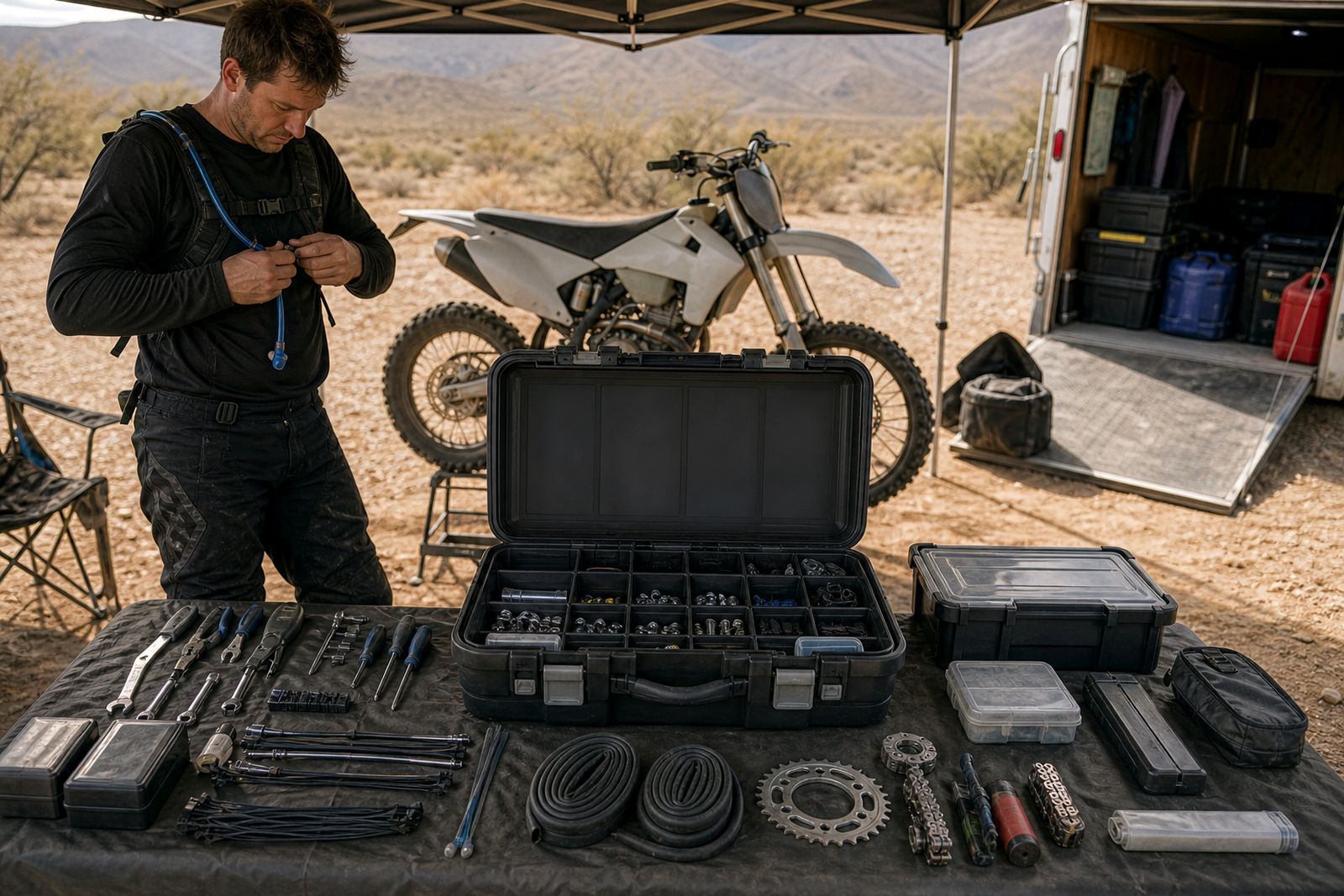
Case footprint and pack order
Spares case layout and contents are arranged around the parts your crew reaches for most often on race day.
Packed contents for race day
Parts like fuses, cable ties, hose clamps, wheel nuts, bleed nipples, spare sensors, and hand tools each have a fixed slot for quick access between qualifying sessions.
Quantities should match the layout sheet before arranging a courier for parts supplied from Durban or Gauteng.
Packed items include divider layout and top tray arrangement:
- Divider layout for mixed hardware
- Top tray reserved for quick fixes
Club paddock adjustments for spares cases
Spares cases for inland events are often packed with extra attention to wiring connectors and secure placement of heavier items, since rough access roads can jostle contents in transit. Place heavier spares at the bottom to avoid shifting. Review the crew's most-used items for each event, and adjust the case setup to match the demands of the circuit and paddock.
Add spare torch batteries, radio charging leads, and a labelled multimeter to the case so that quick checks and replacements are possible even when prep time is short. Store oily parts separately from paperwork and timing sheets to avoid mess or damage.
Numbers to confirm before loading
Record case length, width, depth, loaded mass, drawer or tray limits, wheel stud size, fuse ratings, hose diameters, and fluid bottle sizes used by the crew.
Keep case details with the team spares list and event prep notes so the case layout records what was packed and where it was placed.
What the spares case is for
The spares case is a practical race-day container for the parts and small tools that keep South African off-road and endurance crews moving between stages, service parks and paddock stops. It suits enduro and rally bikes, off-road race vehicles, support crews and club riders who need a tidy, repeatable way to carry fast-moving items.
It works best when the crew has a clear parts list and a defined packing order. Use it for mixed hardware, quick fix items, wiring connectors, torch batteries, charging leads, a labelled multimeter and the small spares that are needed most often when dust, heat and rough transport stages make fast access important.
- Suitable for club, privateer and service crews
- Useful for short sprint events and long, dusty stages
- Helps keep urgent parts separate from paperwork and timing sheets
What to check before ordering
Before ordering, check the class rules for your series and make sure the case setup suits the crew’s fitment needs, event length and terrain. A long endurance day may need different packing from a shorter club round, especially where the route includes heat, corrugations, dust and repeated loading into a trailer or service vehicle.
Confirm the storage layout against the crew’s own spares list so the case can hold the right mix of connectors, fuses, hose clamps, wheel nuts, bleed nipples, spare sensors and hand tools. If you are adding protective gear or hydration to the broader race kit, make sure the case still leaves room for the items that must be reached first in a rush.
- Check class rules and scrutineering requirements
- Match the layout to event length and terrain
- Allow for heat, dust and rough transport
Packing and maintenance
Pack heavier items low down so they do not shift in transit, and keep oily parts away from paperwork, lap notes and timing sheets. Use the top tray for quick fixes and keep the divider layout consistent with the crew’s most-used items. For long events, add spare torch batteries, radio leads and a clear contents list so the team can reset the case after each service stop.
After the event, check for damage, missing parts and anything that moved during transport. Wipe out dust, dry any damp items and confirm the case details, loaded mass and internal layout against the team’s prep notes. If you need help choosing a layout for your race kit or spares box, visit a showroom or send the team a message through the contact form.
- Keep heavier spares at the bottom
- Store fluids and oily parts separately
- Update the packing list after each event
What our Race Prep customers say
Verified Google reviews
Also worth a look
Plan your next race weekend
Send a note through our contact form with the event, the bike or vehicle, your class and what still needs sorting, and we will come back with practical kit and prep options and a quote.
Open the contact form