

Power guide
A power guide for generators, leads, chargers, tyre gear, and paddock power planning at South African circuits and venues.
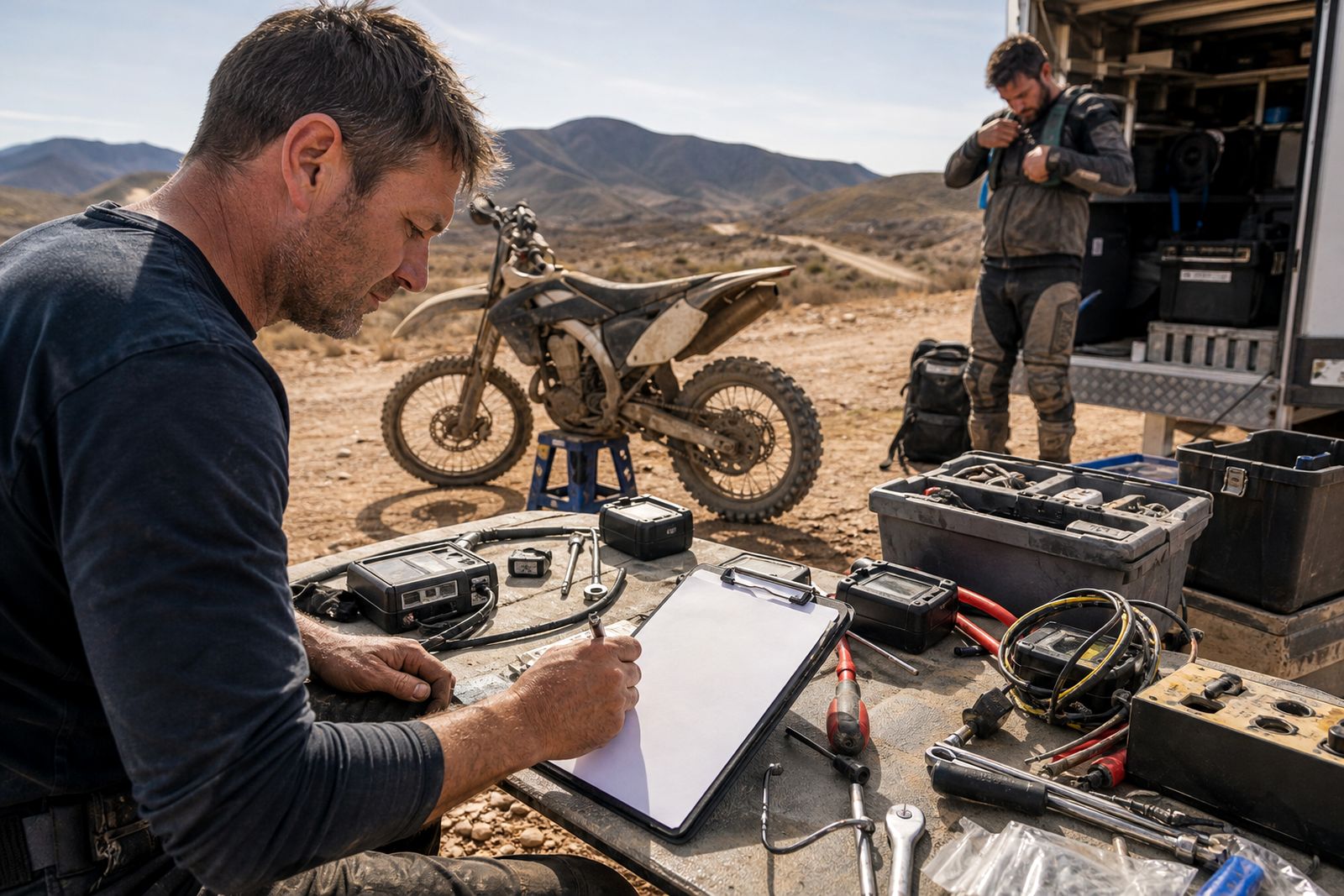
Planning paddock power needs
Size paddock power by checking the actual draw of each generator, extension lead, charger, and tyre equipment for South African circuits.
Writing down the actual power draw for each pit device prevents overloads, memory alone is unreliable, especially when several high-demand items share a single extension. Combining battery chargers, tyre warmers, kettles, work lights and small compressors on one supply point can quickly exceed safe limits.
Problems often show up early when distribution boards, plugs, and extension reels are checked for damage before packing. Insulation splits, taped joints, loose adapters, or burn marks from previous events all signal issues that need repair, and wattage labels must remain visible to avoid guesswork at the circuit.
Checklist for paddock power planning
Map loads, plug types and lead lengths to separate essential equipment from optional kit so the generator or venue outlet is used for what the car needs.
Mark which chargers need overnight running, which tools draw hard on startup, and where a longer lead is safer than adding another multi-plug.
One task involves load planning for chargers and tyre gear:
- Load planning for chargers and tyre gear
Power issues common at local venues
Fixed wall points or portable generators supply most paddocks, and space is usually shared, so both lead routing and total wattage need careful attention.
Lead routing and total wattage become important in shared paddock setups, whether using fixed wall points or portable generators. Signs of wear on plugs, socket faces and battery terminals should be checked, and high-draw items kept away from light-duty reels so tyre gear and tools do not compete for the same supply.
Recording power setup after each meeting
Note power points, generator timing, and any leads, batteries, or kit that have already failed.
Writing down the supply source, lead length, and equipment combinations found during a failure keeps notes accurate while events are still fresh. Using these records before the following meeting often cuts down on excess power gear packed for the circuit.
What our Race Prep customers say
Verified Google reviews
Also worth a look
Plan your next race weekend
Send a note through our contact form with the event, the bike or vehicle, your class and what still needs sorting, and we will come back with practical kit and prep options and a quote.
Open the contact form