

Radio kit specs
Specification sheet for radio kit.
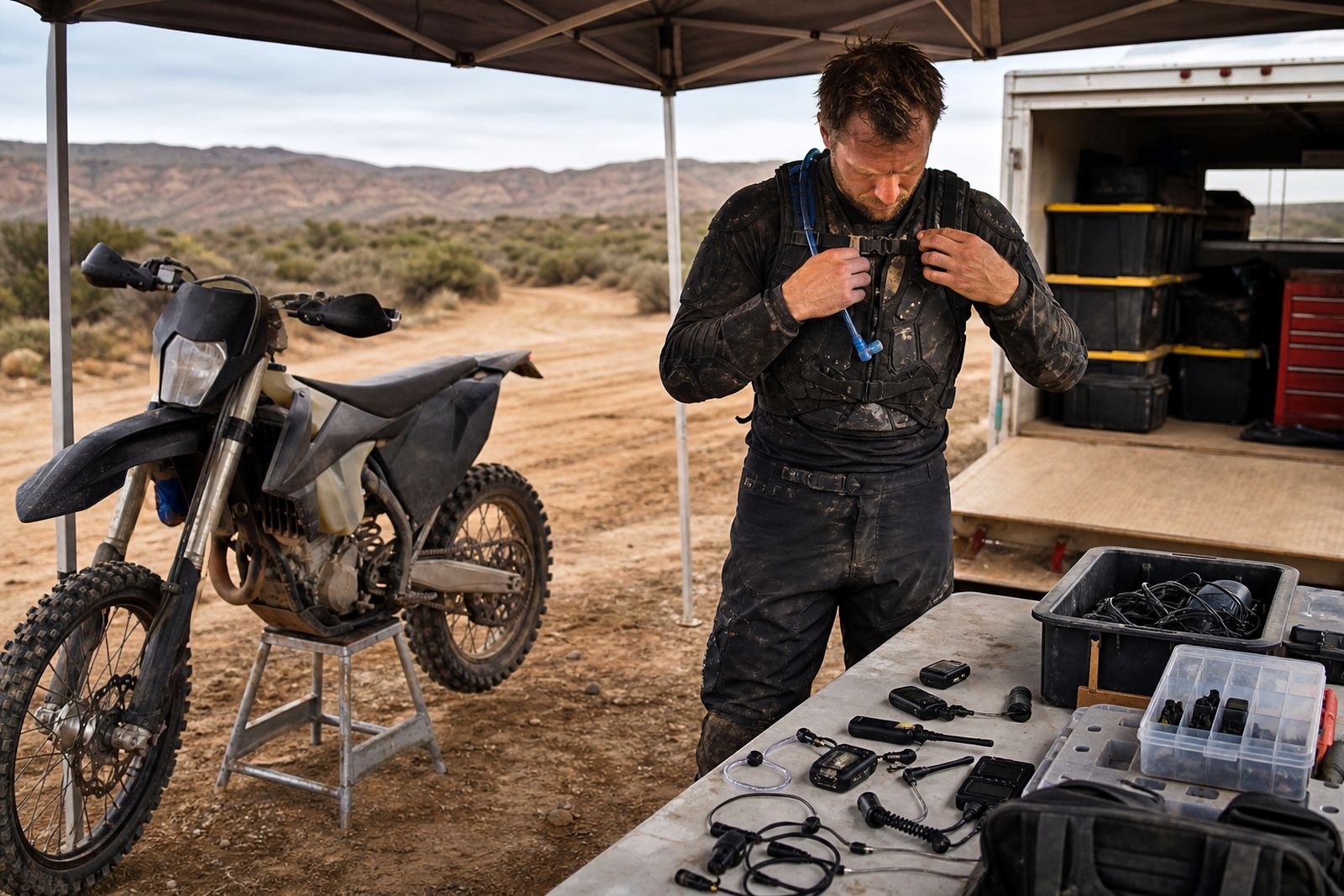
Helmet radio and pit comms
These details shape how the radio kit is used during race weekends. Consider the roles of each crew member and the communication required at each stage of the event.
Headset model, push-to-talk switch, loom, and charger type for each crew member appear on the spec sheet. Circuits with more wind and open space, such as Killarney or Aldo Scribante, may affect microphone performance, so include mic type, ear-cup seal, cable routing, and whether the pit uses handheld or fixed-base radios.
A laminated channel card inside the case helps the team set the correct channels even when background noise is high. Mark driver and pit units so helmets, leads, and chargers remain organised throughout the event.
Spec sheet details
The specs list radio model, programmed channels, battery type, charger input and the connector standard on every headset lead. They also cover speaker rating, microphone position and any helmet adaptor in use. This keeps the crew ready for a club round and makes it easier to swap out a part in the middle of a busy season.
Crew briefing notes and trackside call signs shape hardware setup for each event. When radio units are used at different circuits such as Bellville, Kyalami, or Zwartkops, keep a record of case contents and charger voltage for every move.
Spec sheet details focus on radio hardware setup for events:
- Channel numbers listed per unit
- Battery checks before gates open
- Case contents listed for each event
Radio checks at SA circuits
Direct sun can make cables brittle if left in a parked car, and water left after trailer washdowns may reach connectors. Add these notes to the spec sheet to ensure any replacements match the team's current setup.
If charger banks are not kept ready, the team may lose radio contact during the day. Record whether charging uses mains or vehicle supply, and note the fuse size for any 12 V lead. Spare batteries and a dry storage box are often more practical than adding extra accessories.
Radio checks before first session
Test transmit and receive on every unit with helmets on, engine running nearby and crew standing at normal pit distance. Write down the working volume range, any background hiss and which microphone placement gives a clear voice. One quick bench test in the workshop is not enough for a South African race day.
What our Race Prep customers say
Verified Google reviews
Also worth a look
Plan your next race weekend
Send a note through our contact form with the event, the bike or vehicle, your class and what still needs sorting, and we will come back with practical kit and prep options and a quote.
Open the contact form