Race morning checks
Checks to finish before the car goes out on race morning.
Surface checks before unloading
Checks to finish before the car goes out on race morning.
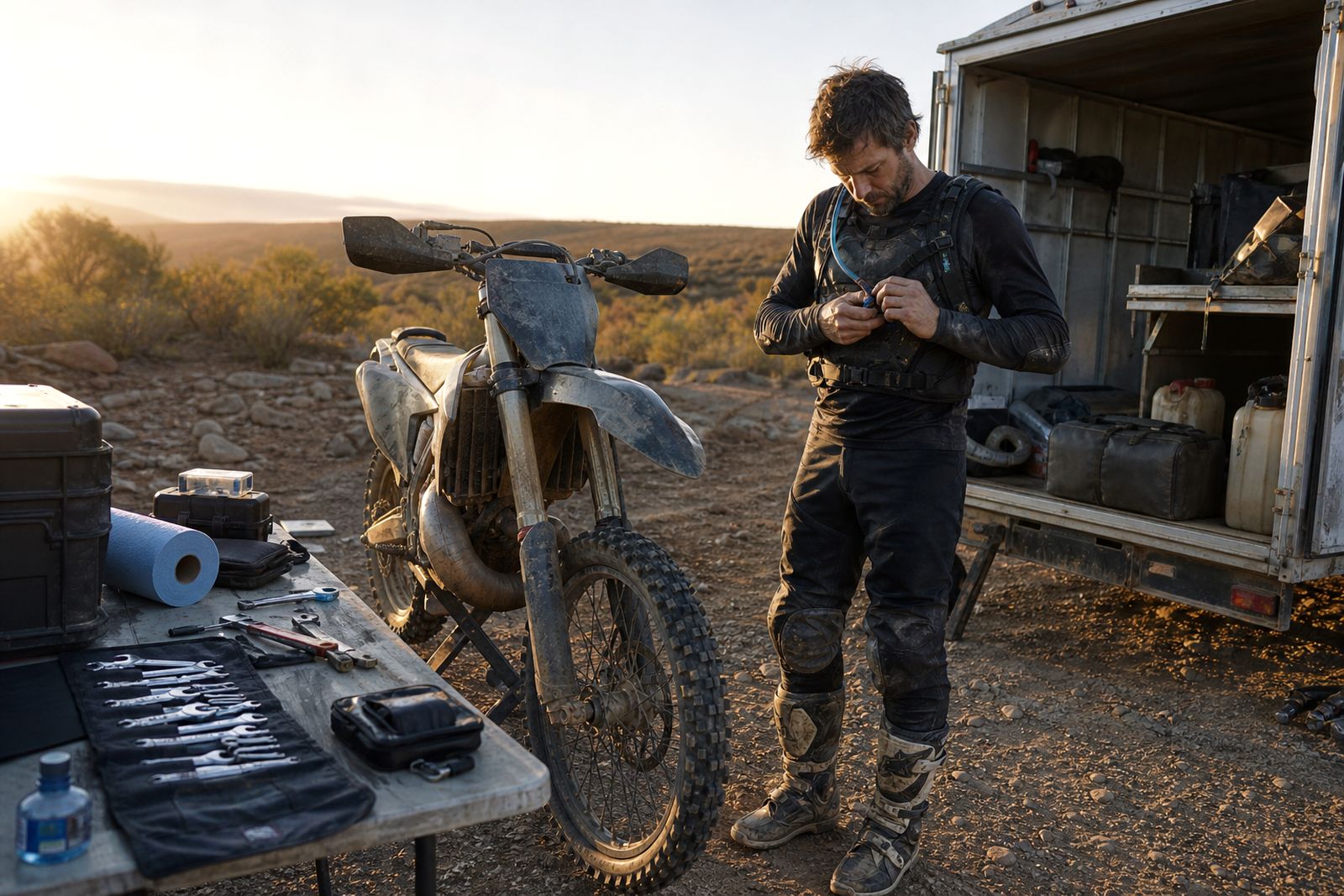
Not every surface in the paddock behaves the same. A wet apron, loose pit lane edge, warm trailer floor or rough workshop bench all change how tape, stands and tyres perform. Teams working across varied trackside conditions benefit from a substrate check before starting work.
One section might be painted concrete, the next rough tar with loose stone, and both affect jack wheels, tape adhesion and how wheel chocks sit. Different surfaces require a quick test before the car is unloaded, as grip and stability shift from one spot to the next.
Surface conditions to review on arrival at the site:
- Paddock surface identified first
- Note wet patches and loose stone
- Mark jack and stand positions
- Crew lead named on setup note
Before setting up the awning or removing tyres from the trailer, decide where mats, stands and chocks will be placed if the ground is uneven, gritty or still marked by overnight weather. That first choice often shapes the rest of the paddock setup.
Trackside surfaces that change setup
The surface under the car, awning and work area changes how jacks, stands, mats and wheel chocks are laid out before setup begins.
Surface types shift from one venue to the next, with morning concrete, midday tar and sandy apron edges all changing how gear settles under the car and awning.
Walk through the setup area and the route from trailer to car to check for painted sections that become slippery, drains that catch caster wheels, and loose stone where wheel chocks may shift. Keeping notes of each zone gives the team a useful record for future rounds at the same circuit.
Key details to capture
Surface type, gradient, and the specific locations for jacking, tyre stacks and fuel handling all influence setup choices. Marking out spots where grip mats or extra tape are needed prevents issues from surface texture or warmth. Reliable notes from each round help prevent repeated setup errors.
Local air conditions sometimes affect adhesives and mats. Noting these effects in event records helps refine setup choices for future rounds.
Main points for event records during setup:
- Base setup on the ground surface
- First ground check recorded
- File crew lead contact with event notes
Conditions South African crews meet
Oil marks, broken edges and patched sections often appear on paddock surfaces and workshop floors. Checking these features before lifting the car helps avoid unstable setups and makes sure gear sits securely around the awning.
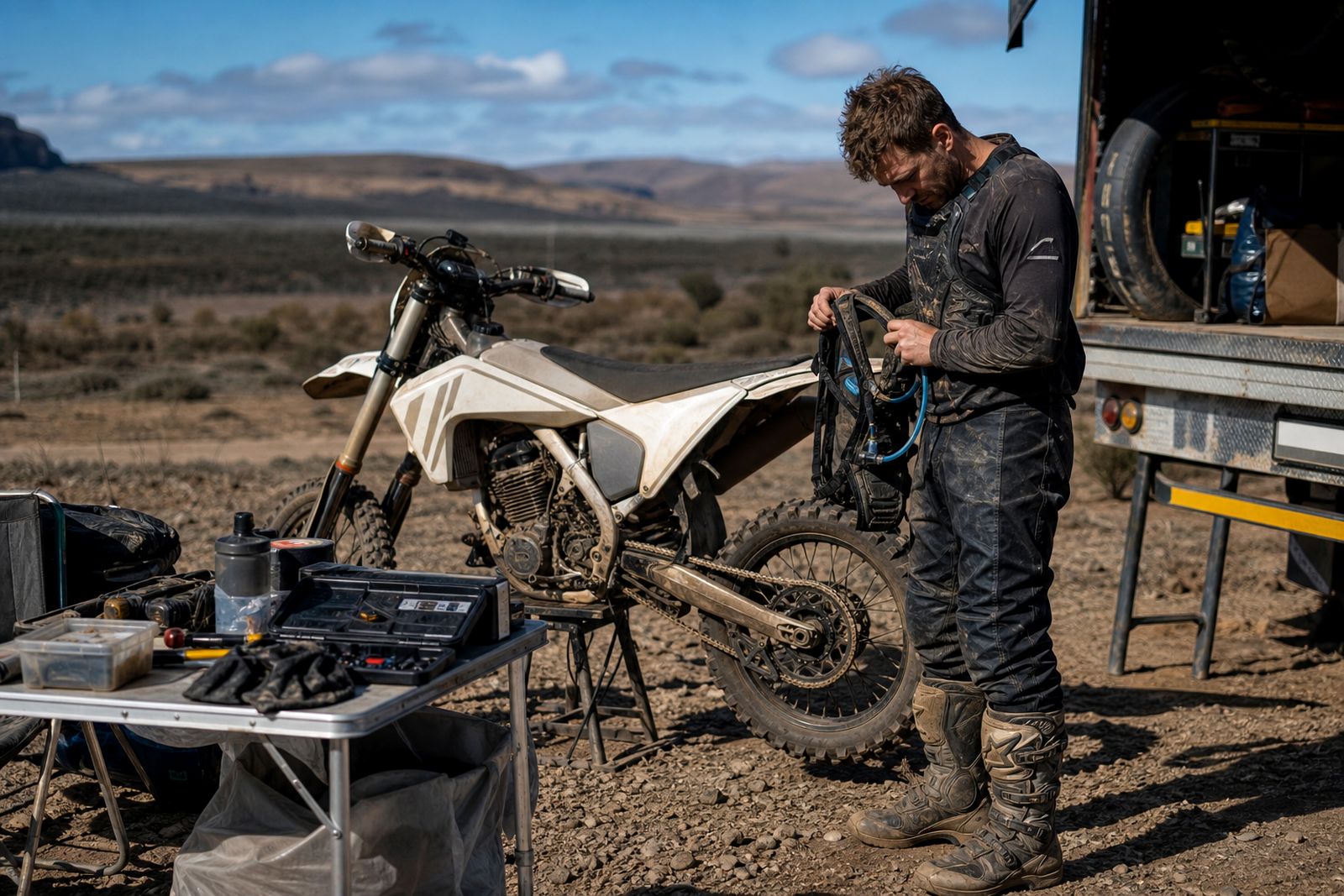
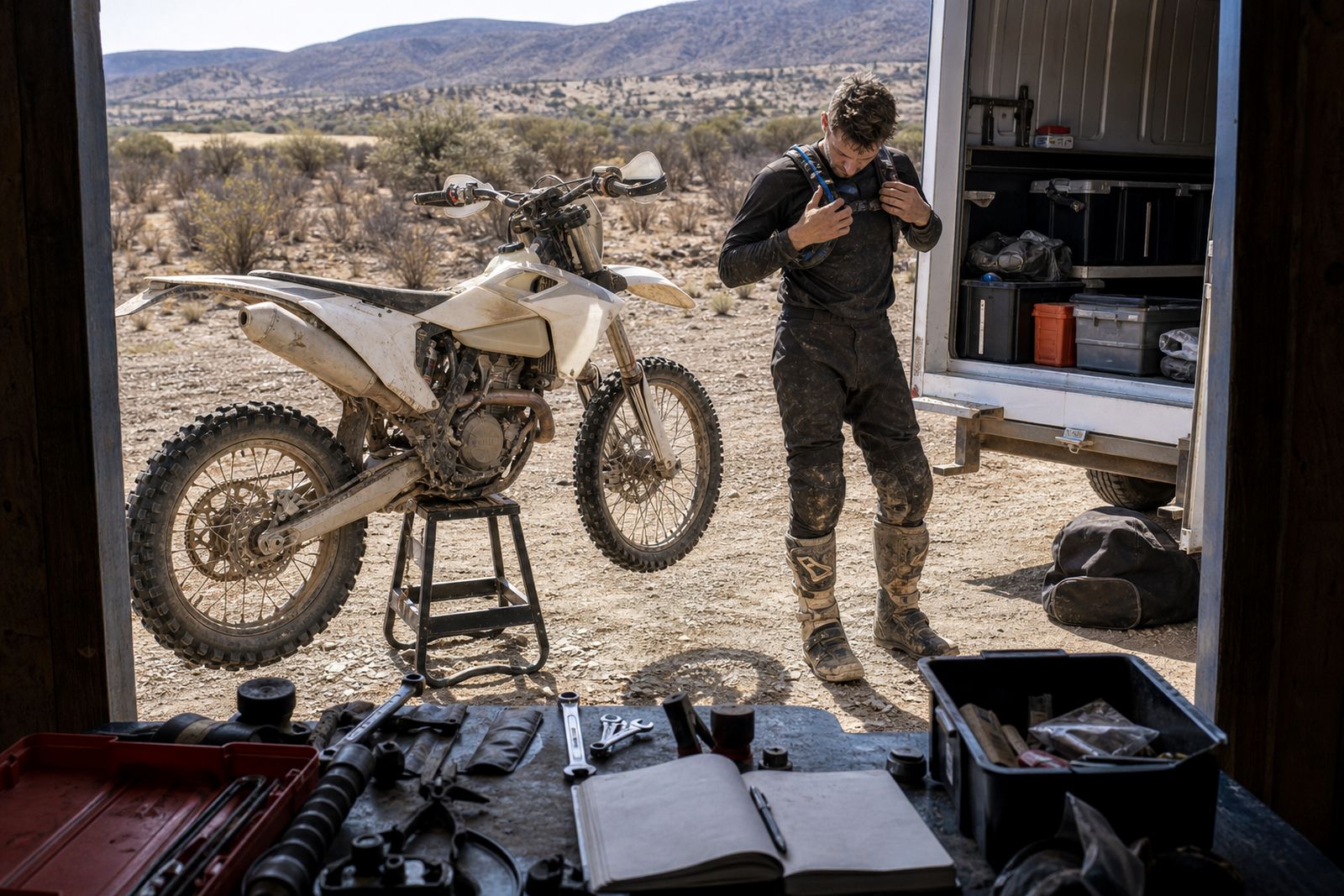
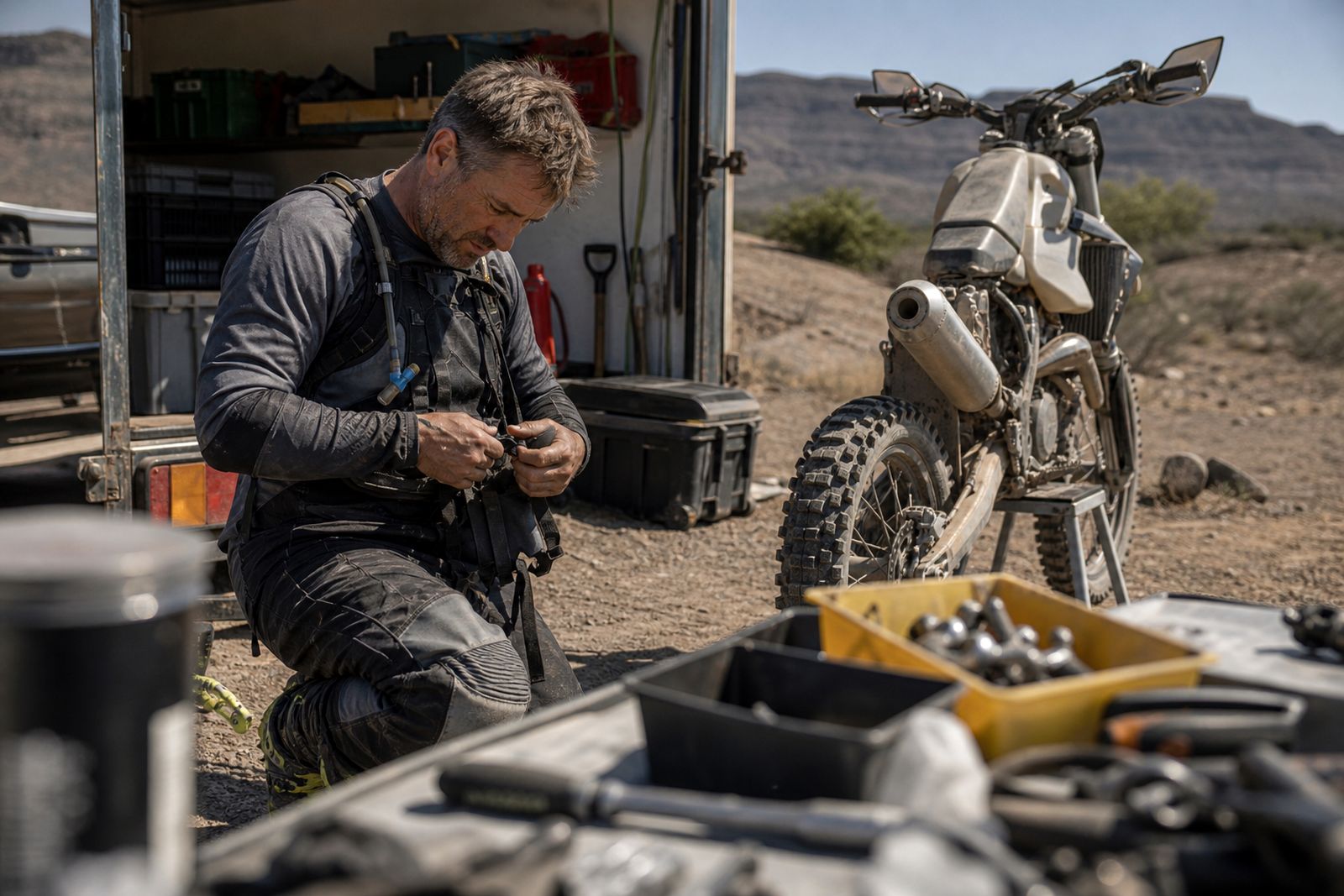
When packing chargers, radios and tyre gear quickly, the work area layout matters even more once you reach the track. A shaded trailer interior may keep tape usable, while a warm deck can soften adhesive backing before setup starts. Small material details matter when the crew is working from tubs and folding tables.
Details worth writing down
Noting which mats were placed, stand positions, and whether the area remained stable through the day all improve future setups. Recording surface debris by the lane edge and any changes made for the next meeting gives a practical setup note for the next round at the same circuit.
What our Race Prep customers say
Verified Google reviews
Also worth a look
Plan your next race weekend
Send a note through our contact form with the event, the bike or vehicle, your class and what still needs sorting, and we will come back with practical kit and prep options and a quote.
Open the contact form