

Soft start checks
A soft-start routine helps club teams check and prepare their cars without missing key steps.
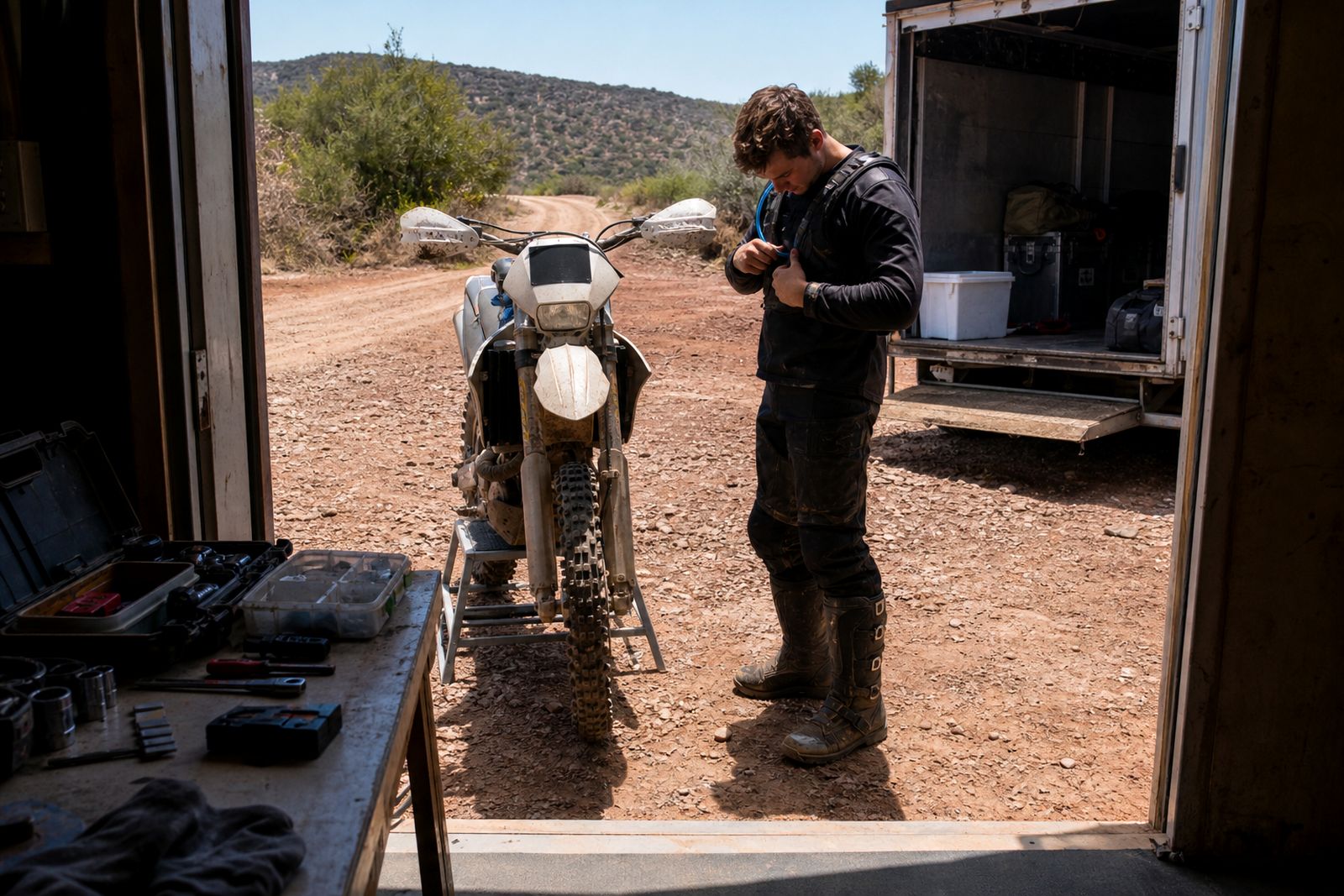
First-hour order at circuit
Rushed unloading, scattered tools and incomplete sign-on often set teams back before scrutineering. Using a set routine from arrival helps keep the first hour organised and efficient.
Soft start checks arranges the order for sign-on, unloading, tyre pressures, battery check, and a quick leak inspection before moving the car.
Tasks to complete within the first hour at circuit:
- Sign-on and gate bands sorted first
- Tyre gauge, torque wrench and charger unpacked early
- Jack points and wheel nuts checked before stands
- Driver wristband, licence and class papers on hand
From trailer stop to scrutineering
Soft start checks provides a routine for checking and moving a club car during the first hour in the paddock, when organised steps help the team avoid mistakes.
Opening jobs at Kyalami, Zwartkops, Killarney and Aldo Scribante may change with weather and paddock surface. Early wind or overnight rain can mean extra care for connectors, visors, brake rotors and electrical plugs. Soft start checks sets the sequence for these checks before the scrutineering queue forms.
First, place the fire extinguisher, wheel chocks and fuel jug as soon as the trailer door drops. Then, handle battery isolation, set tyre pressures cold, and check under the car for transport rub, fresh drips or loose tie-down damage. Only after these steps should the team lay out tools and warmers.
Soft start checks basics
Routine checks at the start of the day help prevent missed steps when teams arrive at once. Items often covered include the transponder bracket, rain light, torque settings, and fuel sample access. Legality, tool access, and readiness for the holding area remain priorities from the first minute.
Wheel socket, logbook and spare gloves must be packed before arranging any transport. Specify car class, main circuits and available trailer space when ordering paddock kits.
Fundamentals to cover for a soft start checks routine:
Trackside variables that shift checks
Morning routines at circuits across the country face different constraints. Delays with radios, jump packs and tyre gear can leave teams short on charged equipment before departure, and early gate queues around Midrand can compress setup time at Kyalami. Soft start checks separates must-do safety and compliance checks from jobs that can be handled later in the day.
Track surface and weather at each circuit can affect your prep sequence. Early wind or overnight rain may require extra care for connectors, visors, brake rotors and electrical plugs. Adjust the first tools and checks as soon as you unload to match these conditions.
First-hour paddock routine
A soft-start prep routine makes sure a club car is checked and ready to roll without skipping important steps.
Keep one copy with the logbook and another in the trailer door sleeve. After the meeting, note any delays to the first session, such as missing fuel, dead radio batteries or a scrutineering hold-up, to improve the next soft start checks routine.
What our Race Prep customers say
Verified Google reviews
Also worth a look
Plan your next race weekend
Send a note through our contact form with the event, the bike or vehicle, your class and what still needs sorting, and we will come back with practical kit and prep options and a quote.
Open the contact form