

Highveld dust
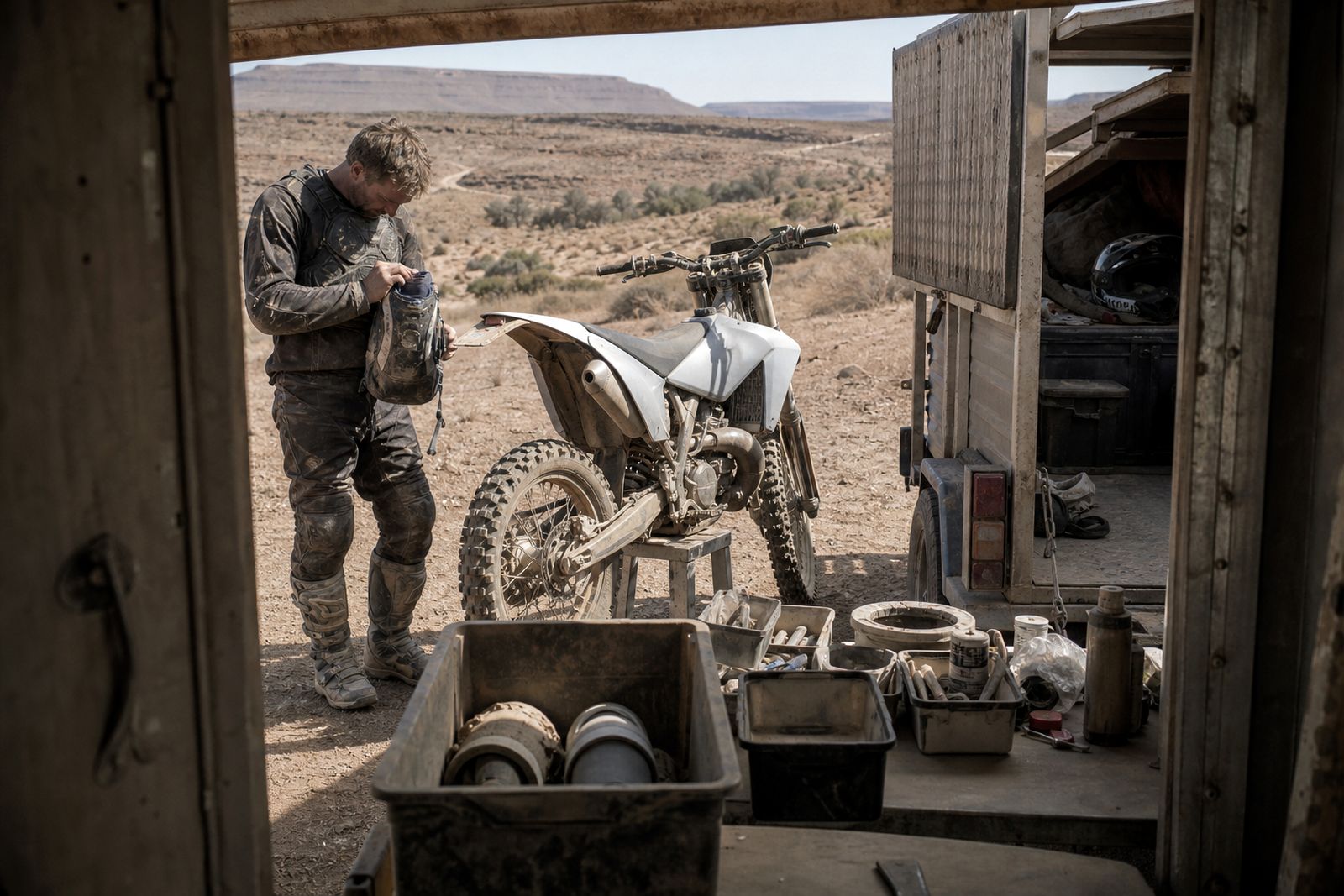
Highveld dust gets into filters, tape and open spares bins first.
First items to seal
Small fragments settle into plugs, timing gear and visor bags at inland meetings. Pack, cover and clean the items most affected at these circuits.
Small fragments often show up early, especially in airboxes, open connector faces and along the sticky edge of race tape.
Sealing procedures focus on dust-prone gear and sensitive parts:
- Air filter bagged before loading
- Connector caps fitted before spares bins are opened
- Timing kit packed in a sealed crate, not loose
- Visor stack marked clean side and used side
Mark items on your spares list and trailer packing sheet that need sealing, wiping, or keeping shut between sessions. Inland circuits can allow small fragments to work into gear while the car is still cooling down.
Managing inland build-up
Gauteng workshops and teams benefit from a methodical routine that shields gear from exposure and keeps it in top condition for every run.
Dry conditions at each inland circuit can vary. Kyalami may bring breezy afternoons, while Zwartkops can remain still. Club meetings in these regions often leave tubs, chargers and tape exposed. Adjusting workshop habits helps filters, radios, timing gear and helmet bags stay cleaner for each session.
A glance over the trailer or bakkie load just before departure often reveals unsealed funnels, spare filters missing sleeves, or visor cleaner sitting next to dirty wheel tools. Catching these issues early can prevent problems that only show up once at the circuit.
Packing steps for inland trips
Inland packing, spanning and cleaning routines target parts that show wear first in dry weather. Direct wording with named items, filter oil, masking tape edges, plug covers, closed-lid bins, makes each step clear.
Packing routines for inland travel emphasise dust protection and documentation:
- Checks built around inland exposure
- Pack details recorded before the trailer is shut
- Workshop notes saved for each event
Inland race-day conditions
Dry grass verges and loose gravel often surround Gauteng paddocks, and wind quickly settles debris on tools and helmet bags. Even a short session at a major inland circuit can leave a film on charging leads and kit. Prioritise lids, sleeves, zip bags and a set wipe-down order to keep gear ready between runs.
Inland rounds call for stricter control around intake parts and electrical plugs. Batteries, radios and tyre tools need charging while their ports stay covered. In the paddock, a clean cloth and capped cleaner bottle are worth more than leaving every box open for quick access.
Packing for dry Gauteng paddocks
Inland cleaning and packing steps are easiest to list while gear still sits on the bench and marked items are easy to spot. Listing used parts and cleaning routines right after a meeting often highlights filters, tape rolls and open bins that need extra attention, making future inland packs more thorough.
What our Race Prep customers say
Verified Google reviews
Also worth a look
Plan your next race weekend
Send a note through our contact form with the event, the bike or vehicle, your class and what still needs sorting, and we will come back with practical kit and prep options and a quote.
Open the contact form