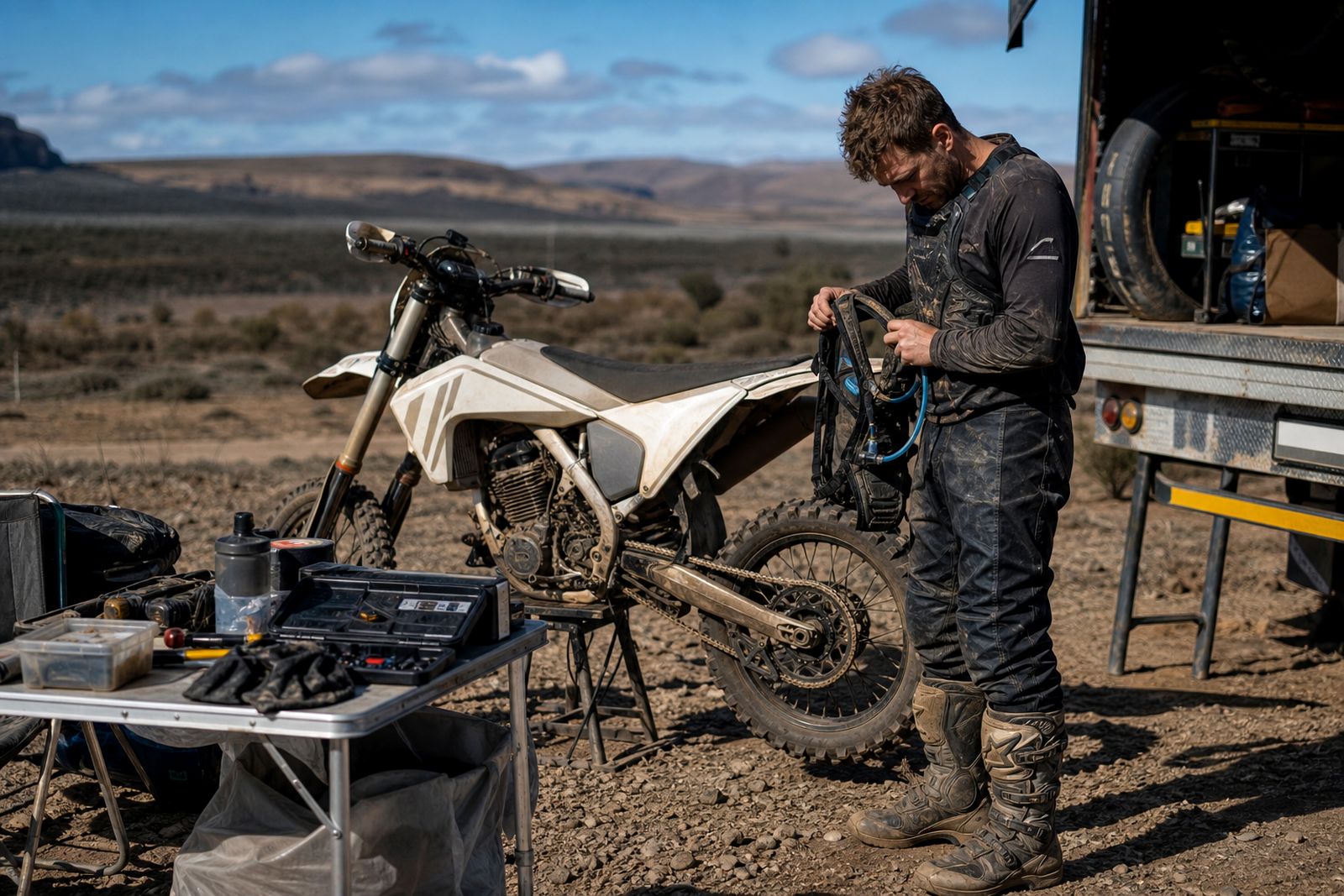
First photo
Photos taken before a dawn load help crews spot missing kit.
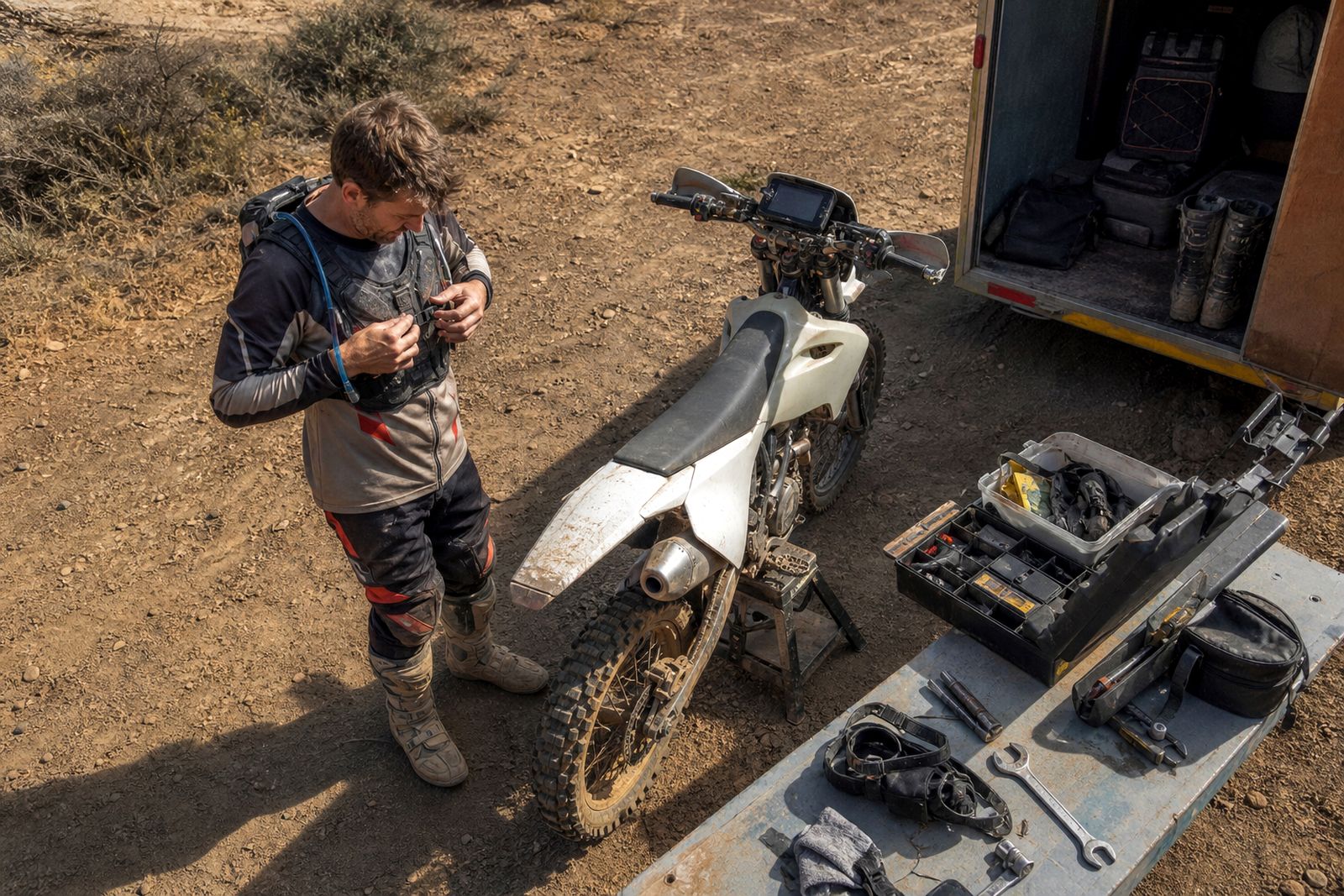
Dawn loading shots that matter
One signed setup sheet, completed before the car rolls out, can prevent later disputes about setup, damage, or installed parts. Capture images of the car, its location, and key features before the session gets underway.
Begin documenting before the bakkie or trailer leaves the customer's workshop. Crews should take clear photos of the car, engine compartment, and packed kit, creating a dated visual record before arriving at the circuit.
Dawn loading photographs worth capturing include:
- Visible departure time and venue in the frame
- Front, rear and both sides photographed
- Folder name matches car and event
- Both the main driver and lead crew member should appear in one of the images for easy identification.
Positioning this image next to the spares list and loading sheet helps clarify what was actually present before departure. Photographs reveal the physical inventory, while a written list accounts for smaller items that can go unnoticed in drawers and bins. Together, these resources resolve later questions about tyres, jacks, fuel gear, and body panels.
Initial images for a race weekend
Photographs taken before departure highlight any gaps in the kit or missing gear, allowing teams to address issues before leaving for the circuit. Documenting the car, wheels, and paddock essentials in these first images helps prevent confusion later in the weekend.
Venue rules and circuit preferences shape the photo brief. Kyalami sometimes requires evidence of tyre sets and fuel drums before leaving, while Killarney may need close-ups of rain gear, tape, and spare clothing tubs. Early departures at Zwartkops or Aldo Scribante often call for careful checks of every loaded item, even in low light.
Snapping images before straps are tightened or doors are closed captures the state of the load without last-minute changes. Frames of the loaded trailer, open engine area, and each wheel stack often reveal items missed by a quick verbal check, and saving these images where the crew can access them from the paddock supports fast decisions later.
Image record
Maintain a straightforward photo sequence on race morning. Focus on specific areas, loose kit worth checking, and details such as tyre labels, panel condition, and fitted numbers for a clear, usable record.
Items packed for Durban must match what is being supplied, and describing the current setup helps the Bellville crew confirm details.
- Photo order built for club loading
- Baseline condition captured before departure
- Logging the digital photo sequence alongside baseline condition details creates a reliable reference point before leaving for the circuit.
Factors that influence the photo brief
Capturing the actual load and preparation for that specific event, rather than just a standard workshop setup, remains essential in every photo set.
Notes describing filters, ducting, connector covers, chargers, radios, and battery packs clarify what travelled in the kit for the trip. Explaining exposed electrics, spare visors, and items affected by circuit variables ensures nothing is overlooked.
What we ask for
Saving the image set on the same day ensures details remain clear. Keeping these photos with the setup note, fuel record, and spares sheet allows the team owner to confirm what was fitted, what travelled, and what was missing before heading out to the paddock.
What our Race Prep customers say
Verified Google reviews
Also worth a look
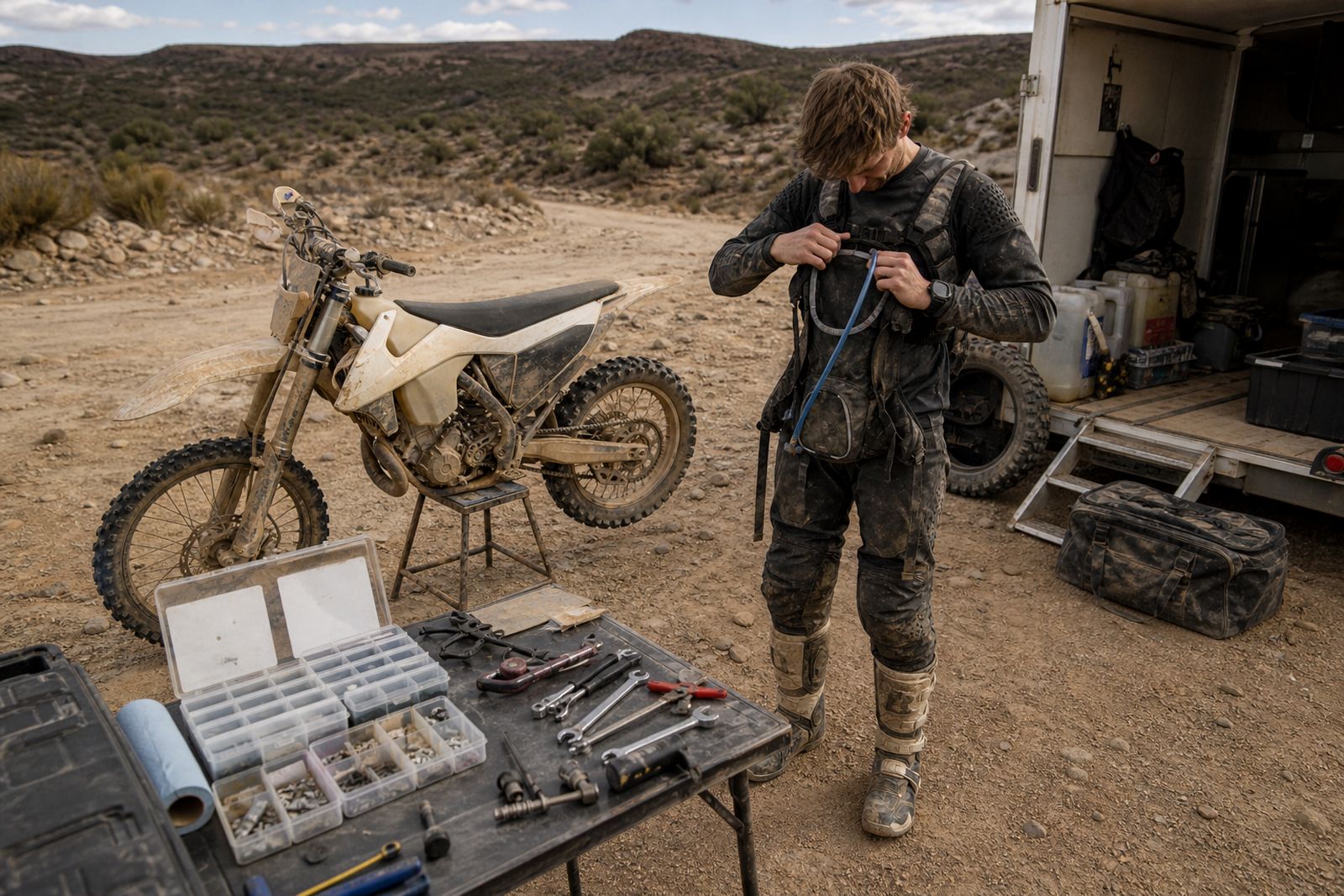
Plan your next race weekend
Send a note through our contact form with the event, the bike or vehicle, your class and what still needs sorting, and we will come back with practical kit and prep options and a quote.
Open the contact form