

Tyre cart specs
Specification sheet for tyre cart.
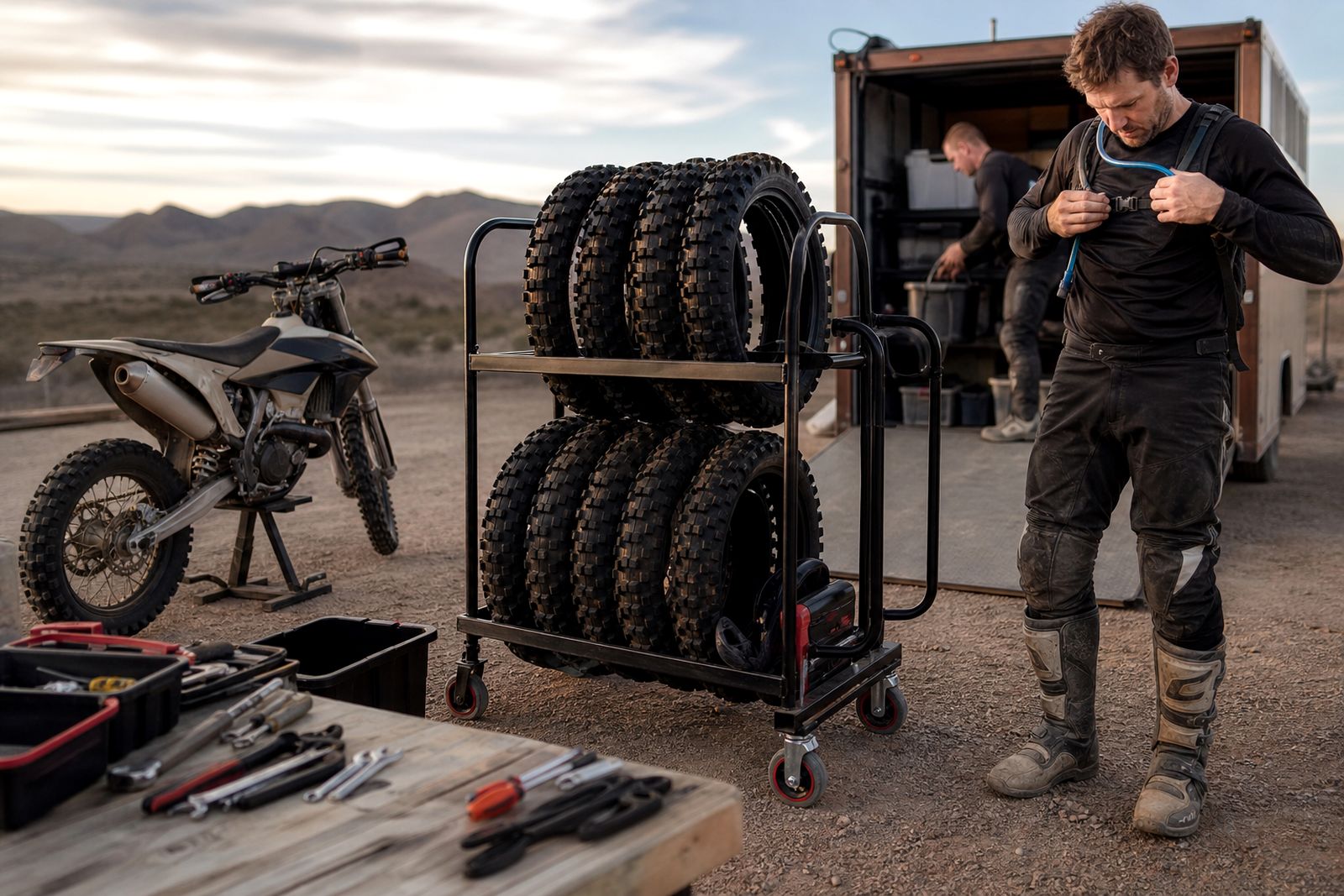
Tyre cart load and footprint
Load capacity, movement and storage information assist teams in matching options to their wheel numbers and tyre handling routines.
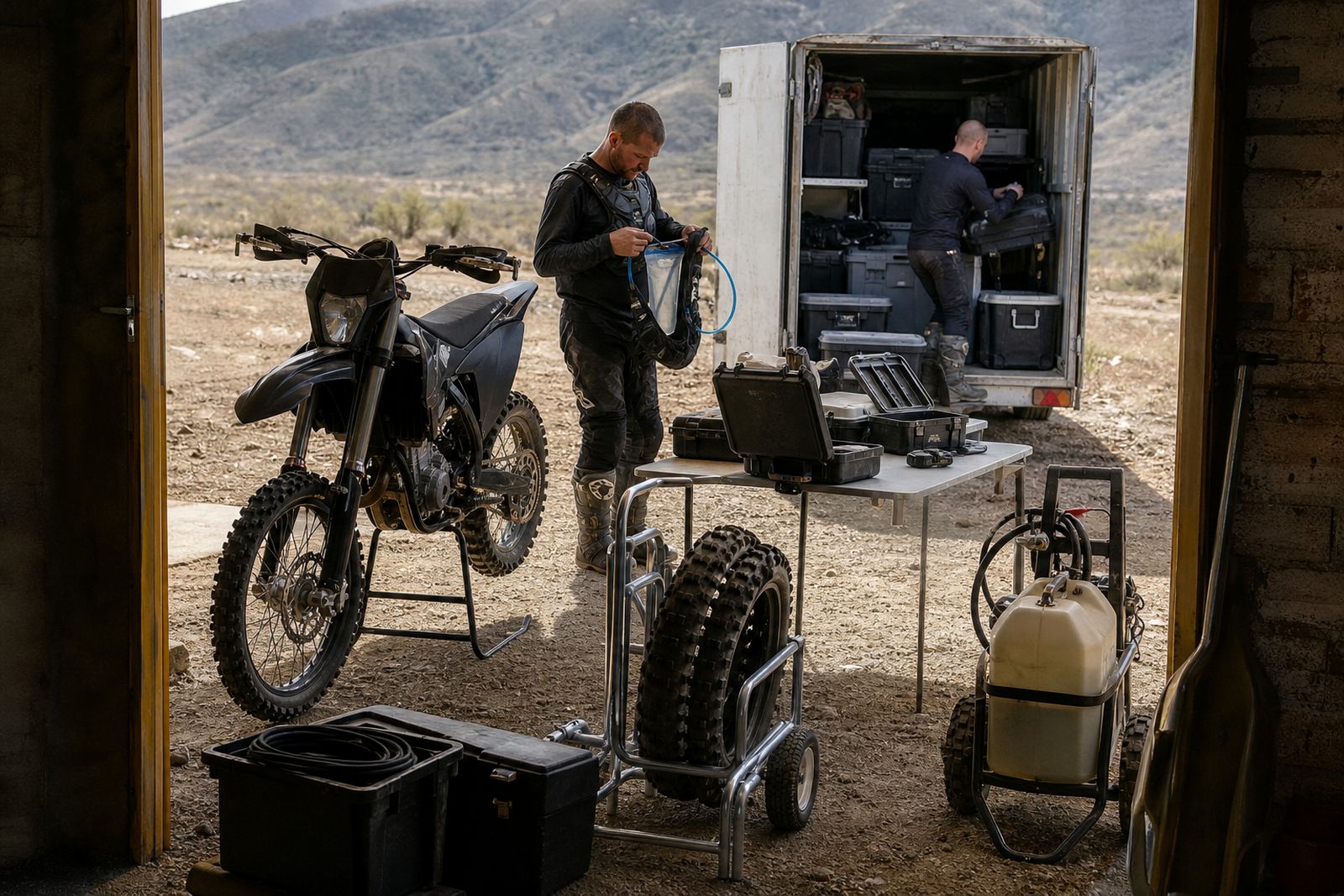
Carrying full race sets without becoming awkward behind the awning depends on practical details. Wheel count, total width, handle height and shelf spacing all influence whether the cart fits into a trailer, pit area or daily tyre routine. Layouts at Kyalami, gusty days at Killarney and tighter spaces at smaller events all shape how the cart gets used.
Wheel numbers handled during a typical event day provide a more accurate guide than only considering ideal cases. Caster function, axle fixings and tyre straps need a check to keep things stable on uneven paddock surfaces; record packing steps for smoother event setups.
Wheel count and storage layout
Carrying capacity, frame material, wheel layout and storage position matter when teams stack tyres differently or share trailers.
Check tie-down points, folded size and ramp clearance if the cart travels in a trailer between Bellville and different circuits.
Wheel storage layout depends on several practical points:
- Wheel count matched to race use
- Caster checks before every loaded move
- Written reference for current cart layout
Paddock conditions across SA
Track layout and surface type both influence how a tyre cart handles when loaded. These factors affect wheel selection, handle grip, finish durability and the security of tyre retention during movement.
After transport and wash-down, inspect bearings and all exposed fasteners. Dirt and repeated trips over joins, cables and uneven tar at club rounds put extra strain on moving parts. When storing the cart, ensure it is secured to prevent shifting into bodywork, stands or fuel gear inside a trailer.
Pre-move checks
Confirm total wheel load, tyre diameter and whether the cart must carry mounted wets, slicks or mixed sets. Note any puncture repair kit, pressure gear or blankets that ride on the cart so the stated capacity stays realistic.
Inspection of caster rotation, frame welds, retaining pins and tracking under load should be routine before rolling out for the day. Keeping spares notes and trailer packing lists with cart information helps any team member verify the setup at the circuit.
What our Race Prep customers say
Verified Google reviews
Also worth a look
Plan your next race weekend
Send a note through our contact form with the event, the bike or vehicle, your class and what still needs sorting, and we will come back with practical kit and prep options and a quote.
Open the contact form