

Spare pads specs
Specification sheet for spare pads.
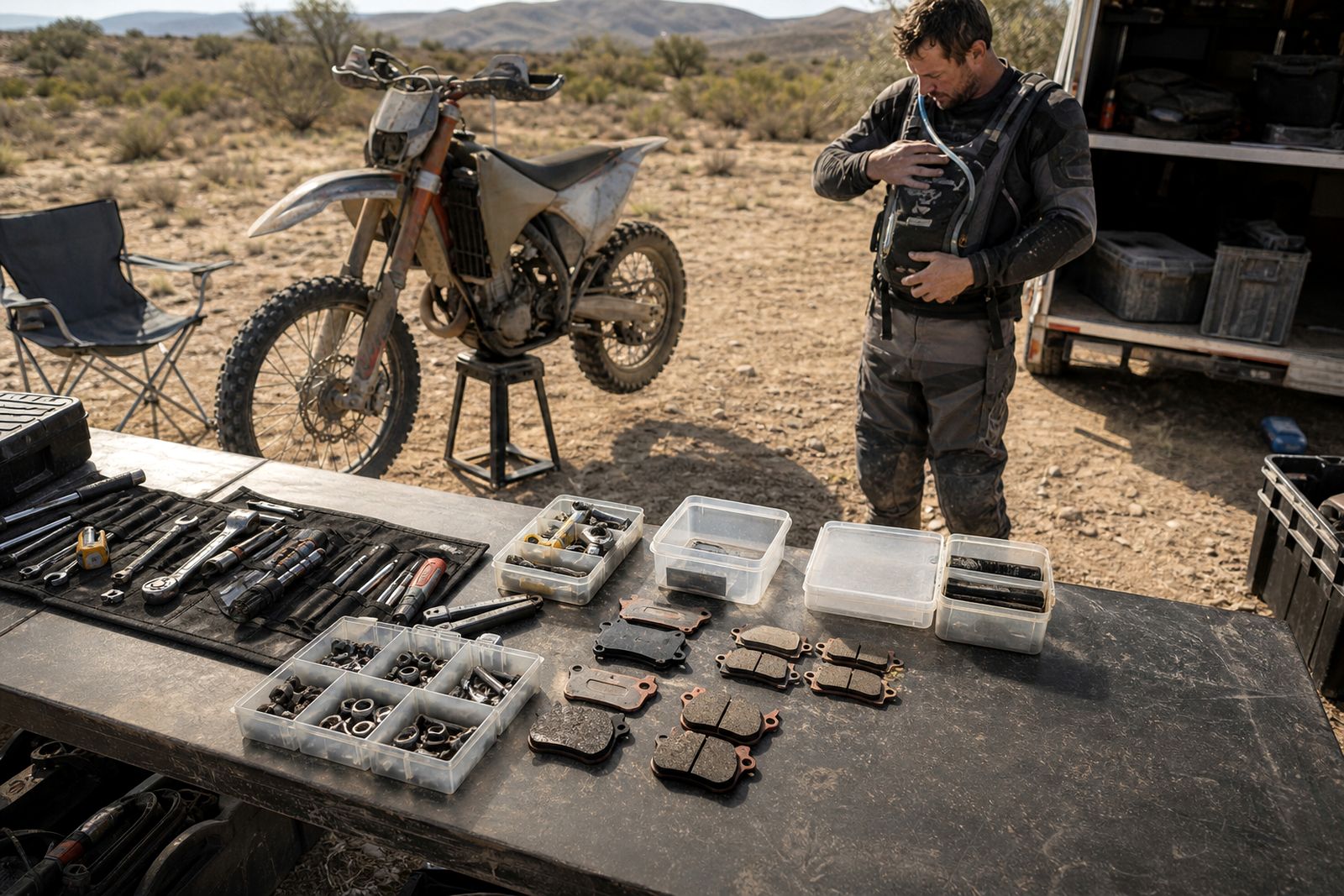
Pad compound and fit details
Fit, storage and readiness notes appear for each set, with details relevant to club weekends.
Kit specs record pad shape, backing plate profile and intended axle position for each set packed for club meetings. Check this before loading for any circuit, especially where one car runs two compounds across different sessions. Rotor wear and track temperature can influence which spare set is needed in the paddock crate.
Each specs note should show pad thickness, any chamfering on the leading edge and the minimum rotor condition needed for proper bedding. Keep one labelled record of the used set next to the fresh spares so the crew can spot taper wear or cracked friction material before first practice. That small check matters when a rushed pad change happens between sessions.
Spare pad details
Plain workshop terms describe each pad set: where it fits, which hardware travels with it, and how it should be stored in the trailer or van. Notes on bedding status, rotor pairing, and any side-to-side wear seen at the last outing help club teams avoid confusion and keep a clear history for every set.
Brake service notes and event packing lists help ensure the correct spare set travels with all required pins, clips and anti-rattle hardware. Count each pad pair and label whether the set is new, partially used or for emergency use only before loading for the weekend.
Pad set checks before loading include:
- Pad shape matched to caliper fit
- Wear thickness logged before loading
- Pins, clips and retainers
Circuit factors for brake spares
Some circuits leave fine residue on wheels, hubs and pad faces, so specs should note cleaning checks after each run. For longer races or heavy braking zones, record those details beside the spare set rather than relying on memory in the paddock.
Include every retaining part needed for the specific corner of the car when packing brake spares. Note whether the pads have already been bedded, as placing fresh material onto a worn disc can lead to very different results during the initial laps.
Brake pad checks before each event
Current pad depth, edge cracks and visibility of the wear indicator slot should all be logged. Rotor side and left or right location also matter if used pads are being kept as backup, because uneven wear can make a mixed set useless at the circuit.
A sheet placed with the spares box lets the crew check fitment without unpacking every packet in the trailer. Records of the last fitted compound and its condition assist when a driver reports a long pedal or altered bite after practice.
What our Race Prep customers say
Verified Google reviews
Also worth a look

Plan your next race weekend
Send a note through our contact form with the event, the bike or vehicle, your class and what still needs sorting, and we will come back with practical kit and prep options and a quote.
Open the contact form