Service First
Service First sets out workshop-led race prep so paddock setup follows the car’s service needs, not guesswork.
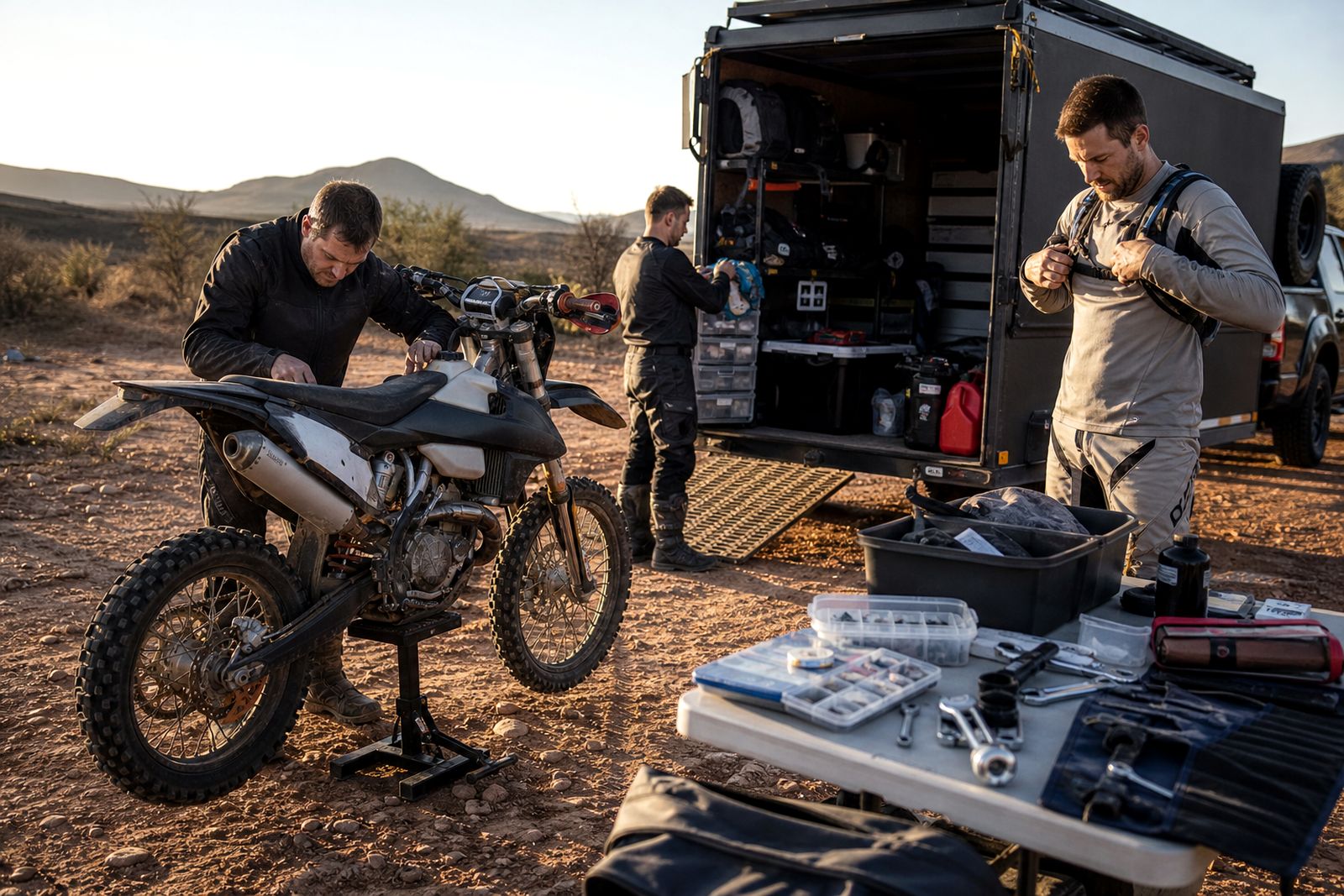
Workshop jobs before loading
Service First is built for teams where workshop discipline drives the race weekend. It connects prep notes to the actual service jobs, so the paddock setup follows the car's needs instead of guesswork.
Name the class, the venue, and the service item driving the weekend. Brake bleed work for Killarney, wheel bearing checks before Zwartkops, and cooling inspections for Kyalami all change what goes on the board. Smaller club meetings need concise notes because crew numbers are often thin and the same people are loading, wrenching, and signing on.
Workshop layout and equipment arrangement should be described before packing the trailer. Tyre stack status, service labels on the car, and any parts set aside for replacement all matter. Locations for tools and spares, along with the car's present condition, help the paddock crew decide what is needed.
What goes into the note
Every job in a service first pack can be checked, signed off and repeated at the track. The notes call out fluid type, fastener checks, spare part gaps, and tools needed for that event. Make sure the service work that must be visible in the paddock is clearly listed.
Service First grids combine booking timing, workshop layout notes, and any service jobs still open. If tasks remain after arrival, note them with the car details to keep the crew updated.
A service note covers workshop layout, timing, and circuit tasks:
- Service tasks tied to circuit demands
- Workshop layout notes before trailer doors close
- Booking timing included with briefing
Workshop checks for race day
Gauteng meetings can bring rubber build-up on connectors, while trailers used for inland trips may show wear after longer journeys. Inspect trailer plugs and check for any parts left exposed during transport.
Plan ahead for charging radios, battery packs, and tyre equipment. For trips to Eastern Cape or Western Cape rounds, check when fluids are topped up and wheel nut marks are checked again after unloading. Workshop planning helps maximise limited time for service work during the event.
Brief checklist
Outline the current workshop setup, booking timing, and any service jobs still open. Include details such as tyre stacks, service labels, or parts prepared for replacement.
Capturing the workshop setup, booking timing, circuit name, and any jobs still open on the car keeps the team organised. Details such as leaks, vibration, or parts ordered but not yet fitted ensure the paddock sheet reflects the car's current service state.
What our Race Prep customers say
Verified Google reviews
Also worth a look
Plan your next race weekend
Send a note through our contact form with the event, the bike or vehicle, your class and what still needs sorting, and we will come back with practical kit and prep options and a quote.
Open the contact form